Followers

9/30/19

Let’s start with leaves, a printmaking unit.


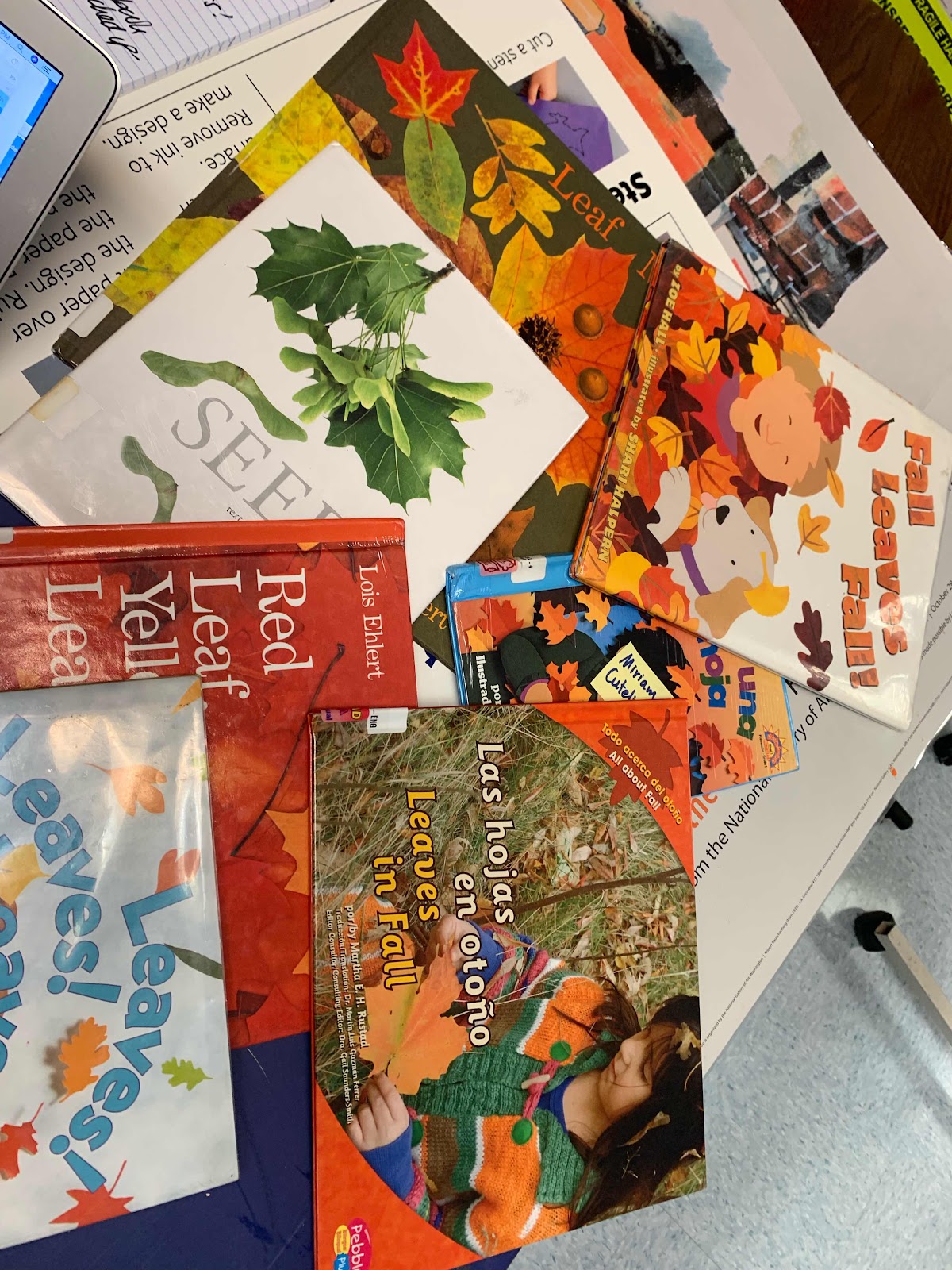
At our school we have an awesome library and in fact, we have wonderful, and helpful librarians who were able to find great books to get us started. For the first class in this unit I simply took the kids out to our school garden and they were to draw leaves, or any other nature treasures they wanted to draw in their sketchbooks. The sketchbooks are these composition books which we personalized with magazines images and words. 

Seeing as this is fall and flowers are drying out for the winter, the kids got very excited about seeds. Seeds were everywhere. This child here is pocketing some seeds to take home and plant. Their high level of excitement was energizing to witness and I knew we were on a good path to learning. 

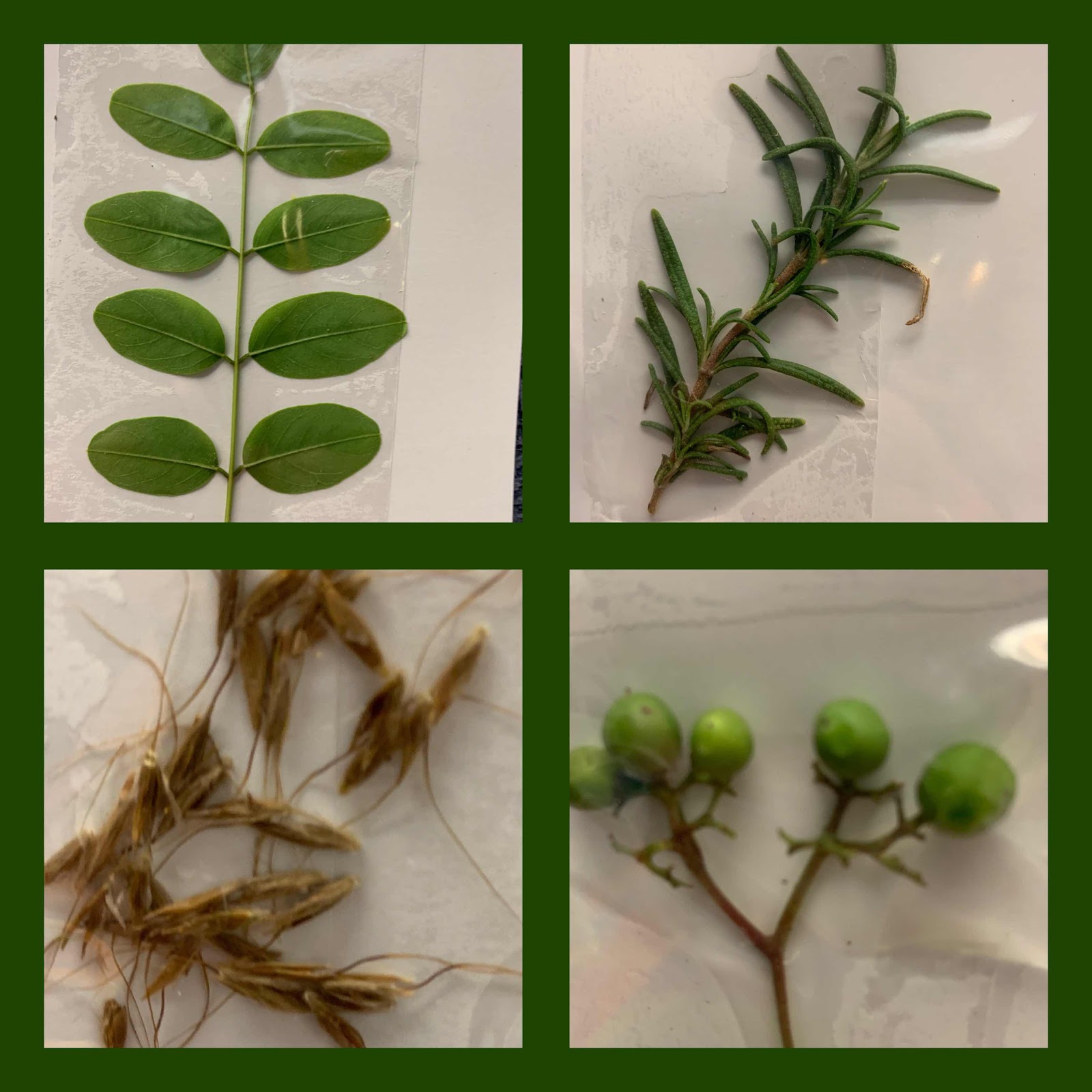
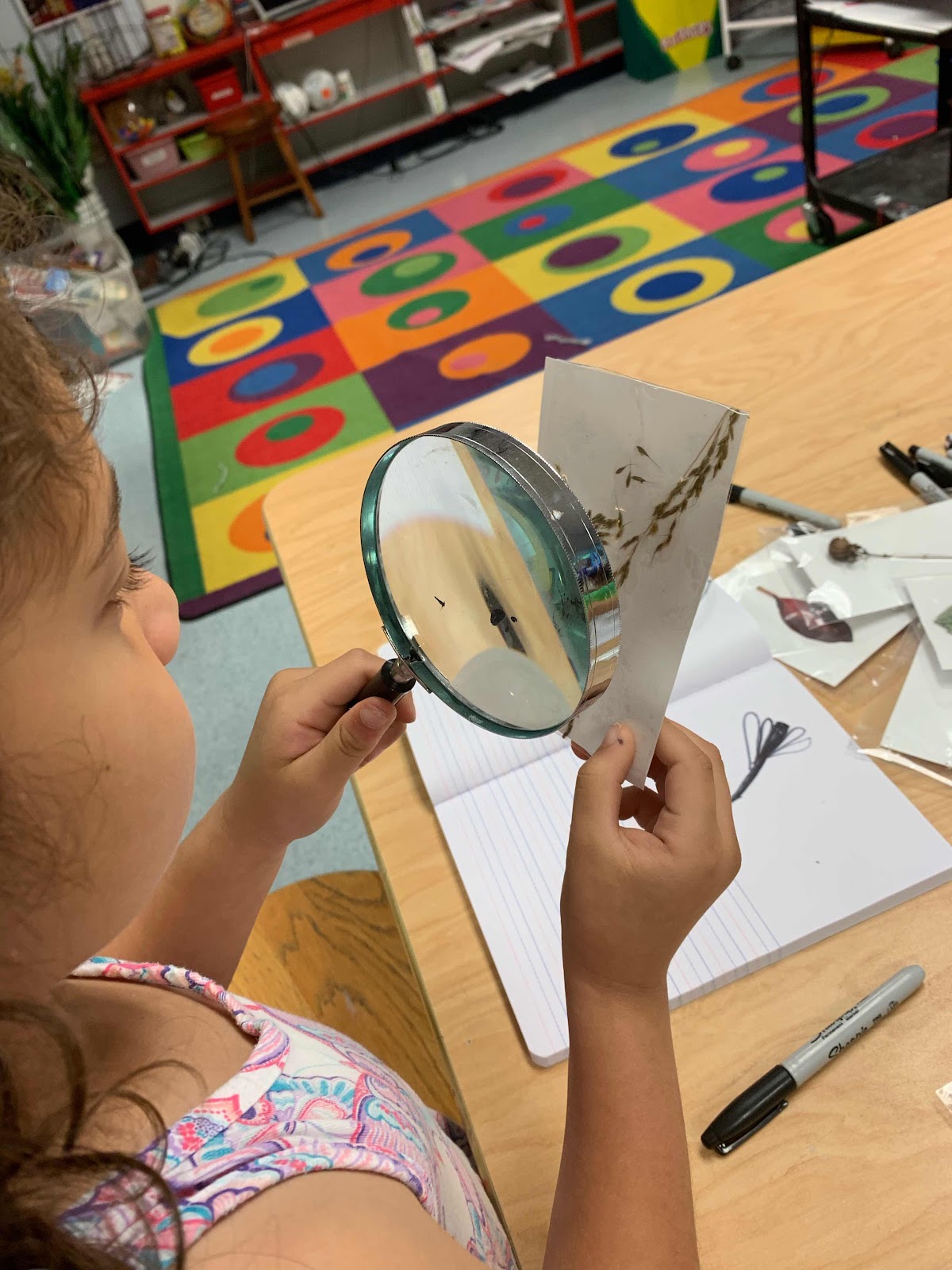
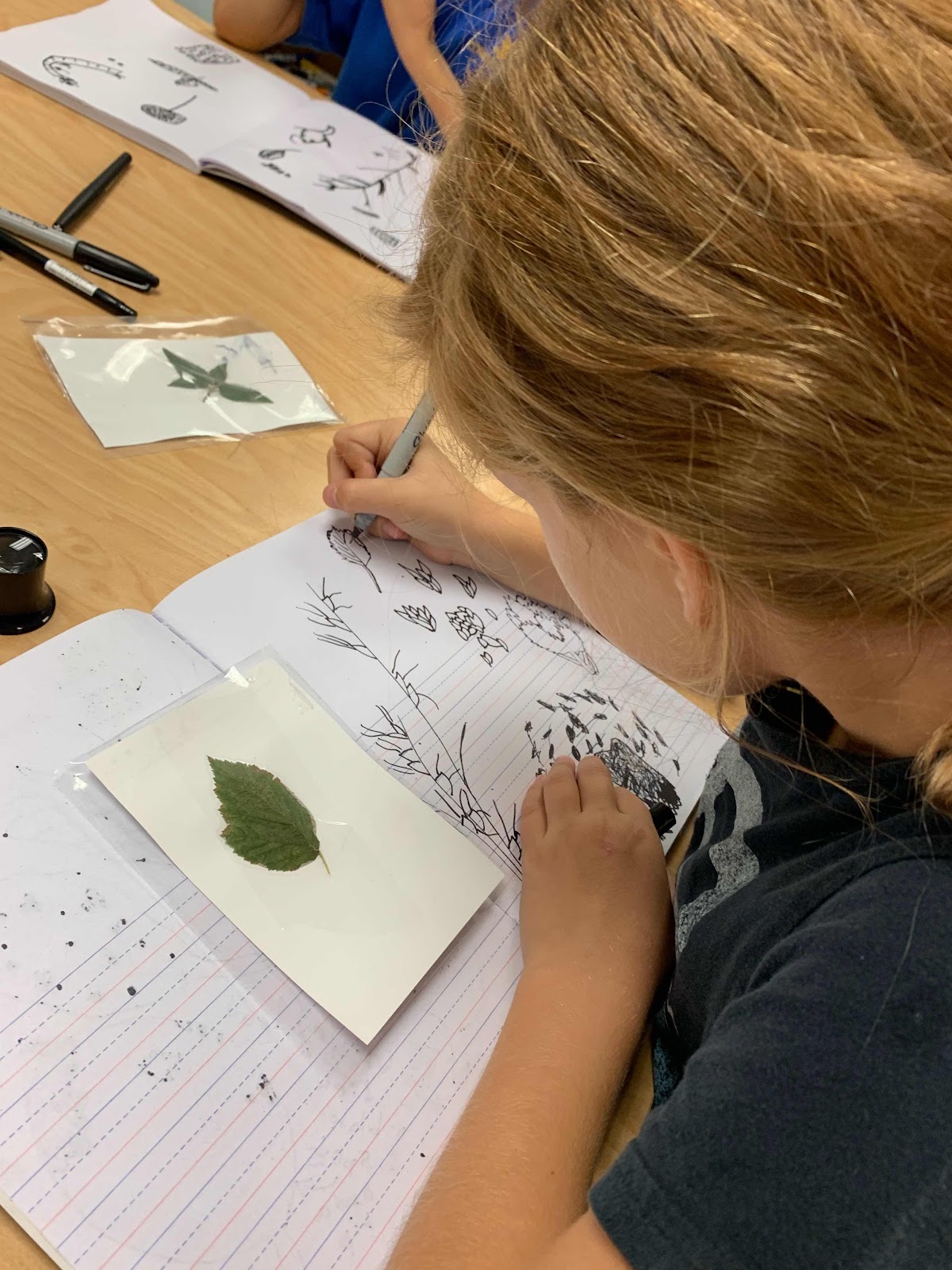
             During the walk we also collected some "treasures" and I took the time to individually display them in these clear pockets. I used clear tape to tape each natural treasure to a white paper and stuck the papers in the clear pocket. The next class (class #2) kids were given these cards as a resource. Using black markers (felt pens/sharpies) kids tried drawing what they saw. They were so incredibly fun to watch. I have a class set of these small private eyes, they are small, individual-use magnifying glasses. The kids were so interested and intrigued by what they found when looking through them. 


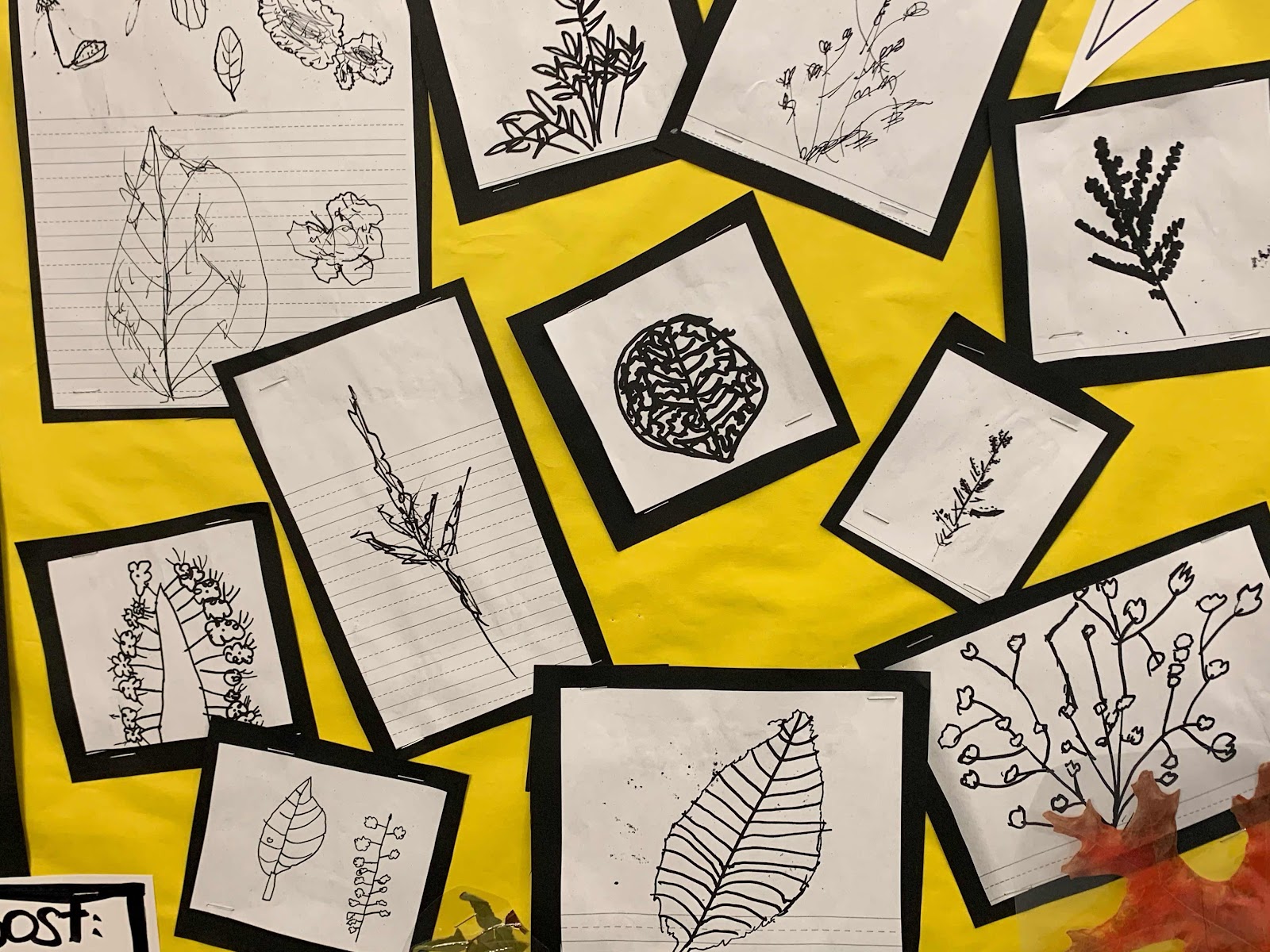
The drawings from this second lesson were just to die for!! Each one could easily be on a t-shirt or a printed card. 


I am so excited about these drawings. They just make me smile. Kids' drawings will always trump any drawings adults could make, they look effortless and spontaneous. 


Tweeted: "Drawing the items we found yesterday during our nature walk using loops #scienceconnection #apsarts #artsed #cis_aps ⁦@SrPadillaAPS⁩ ⁦@Cante2_CIS⁩ "


Transferring our drawings onto the printing plate. 


Using scratchfoam and pens to press down, make the lines thicker and color in a few shapes. 

These printing plates are ready to be printed. 


Our initial prints. I provided them with assorted, colored fadeless paper and ONLY black ink. In the past I have given them various ink colors and white paper...but, I find the doling out of one color onto the trays much easier than constantly being asked to provide a specific color to a specific table. The assorted fadeless paper allows me kids control of some color while allowing me a bit more freedom to actually walk around and assist where needed. 


9/17/19

Kindergarten collage unit


9/4/19

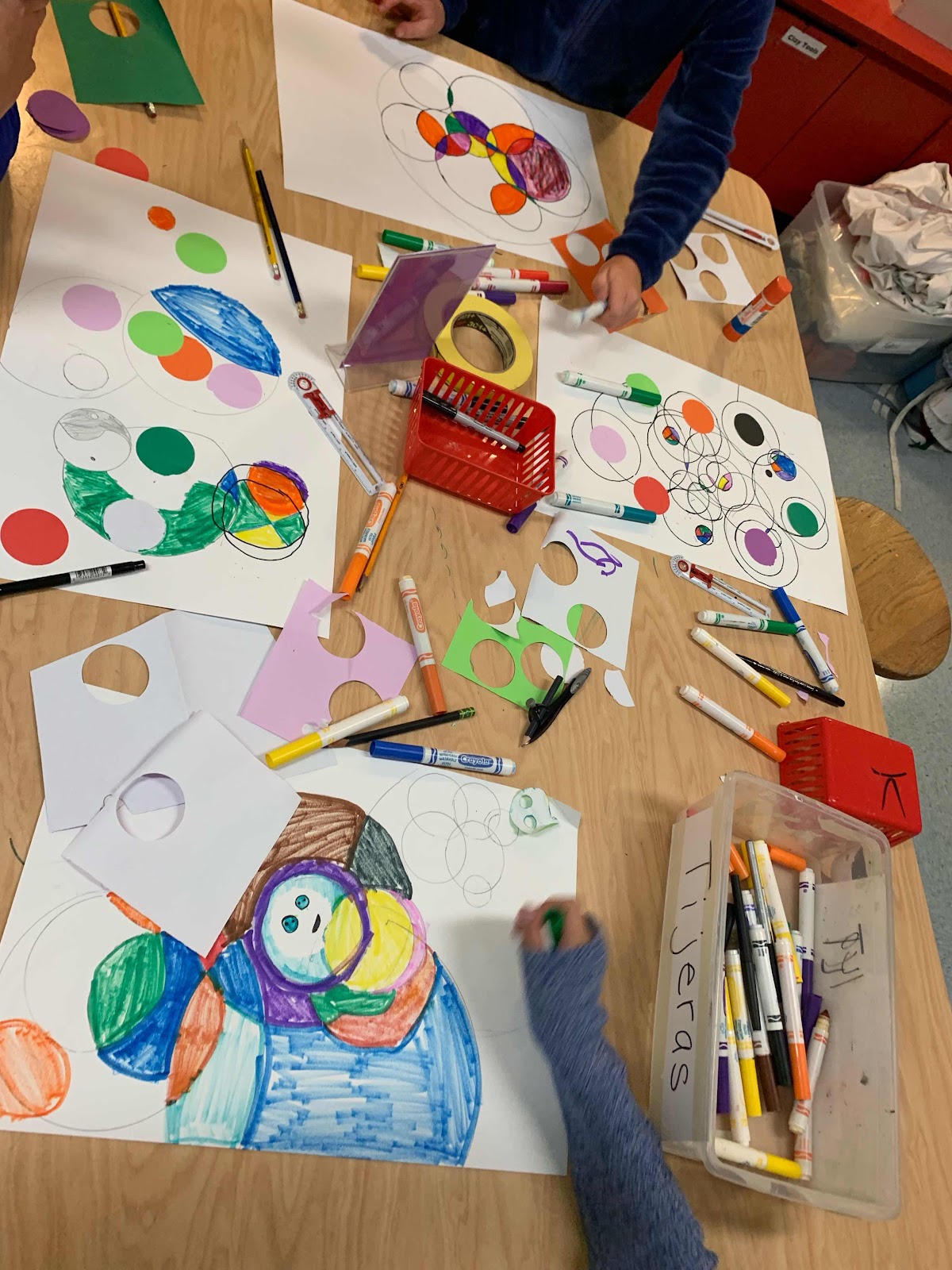
The dot - Explorations in circle making


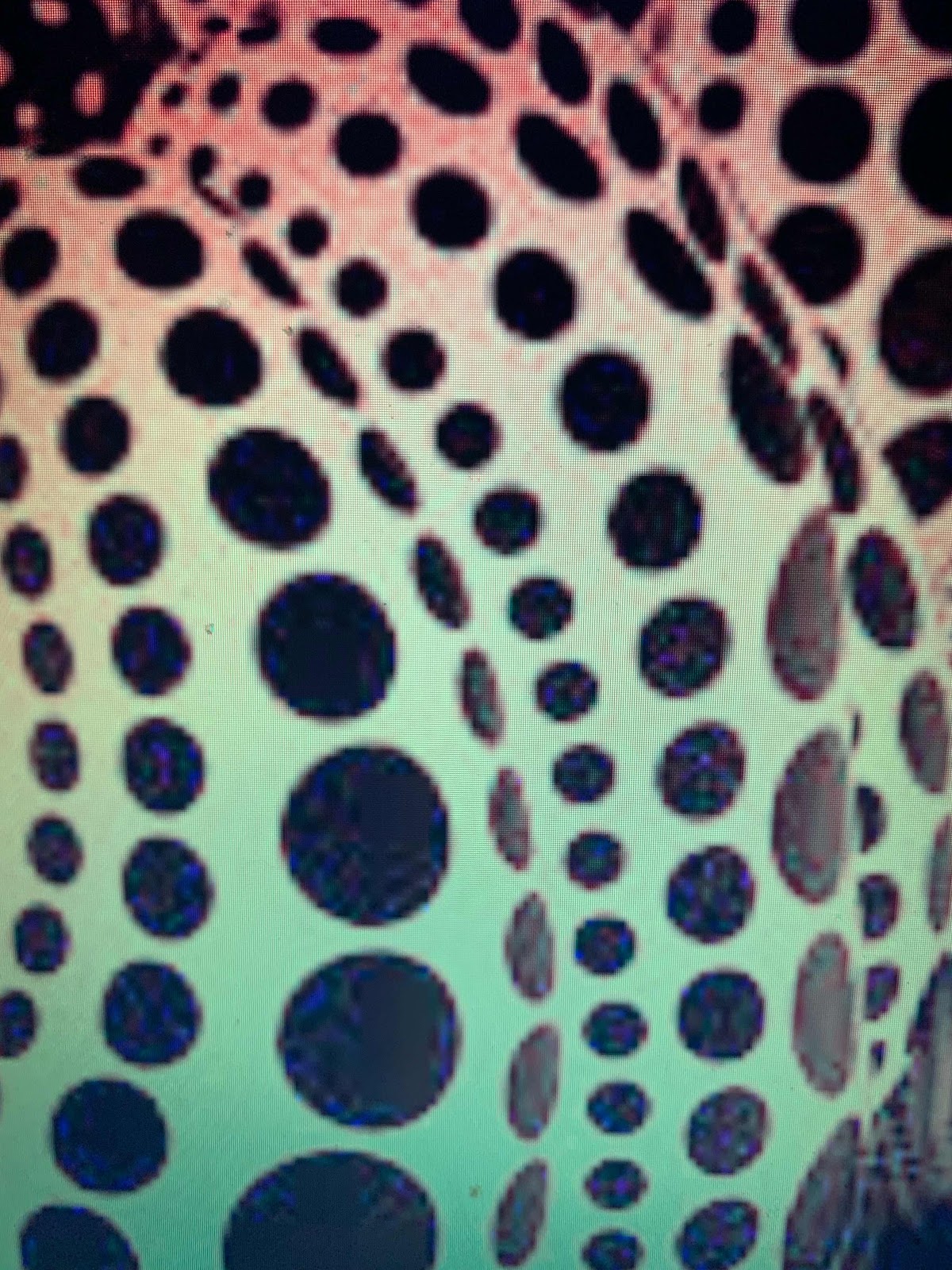
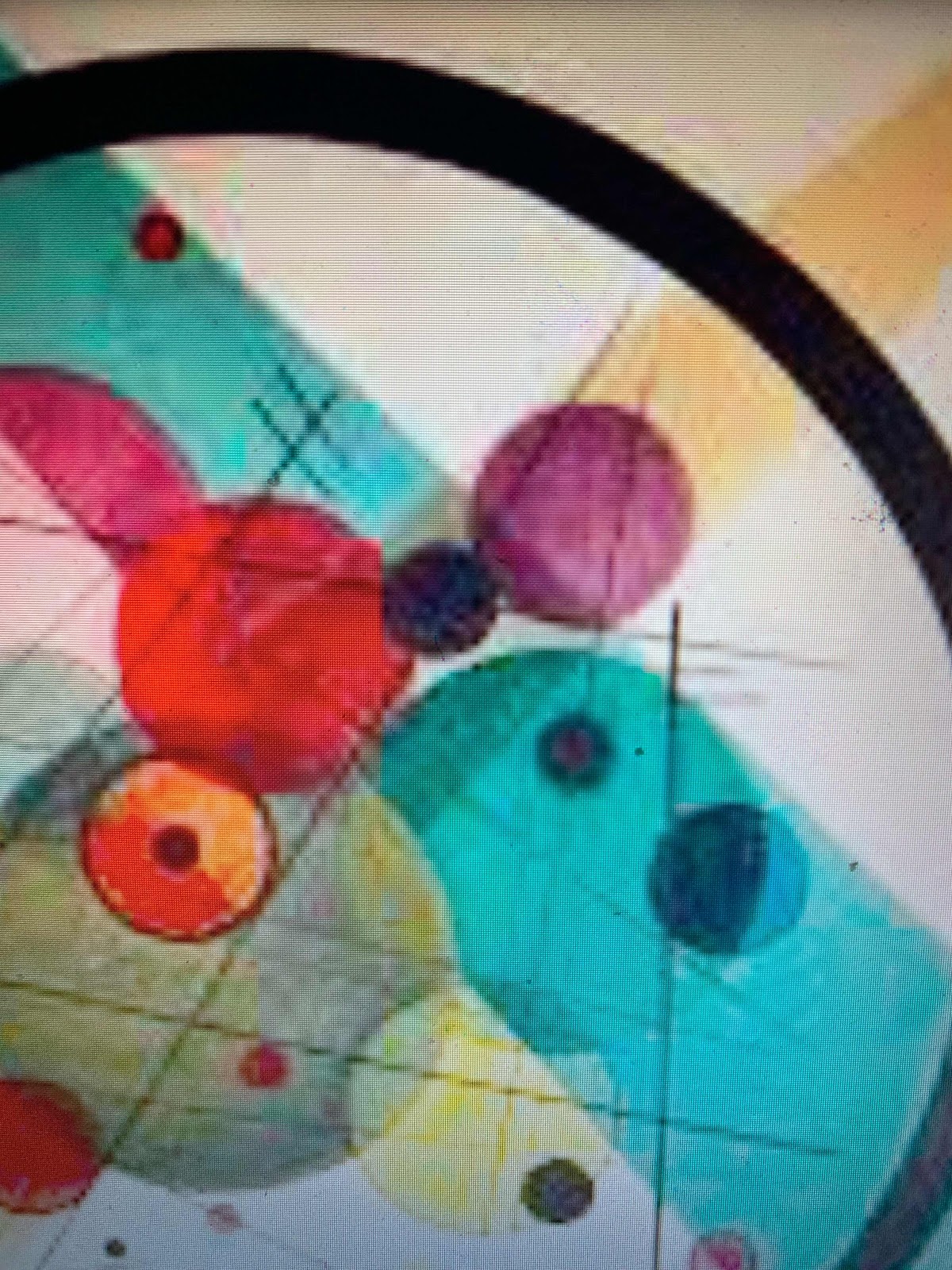
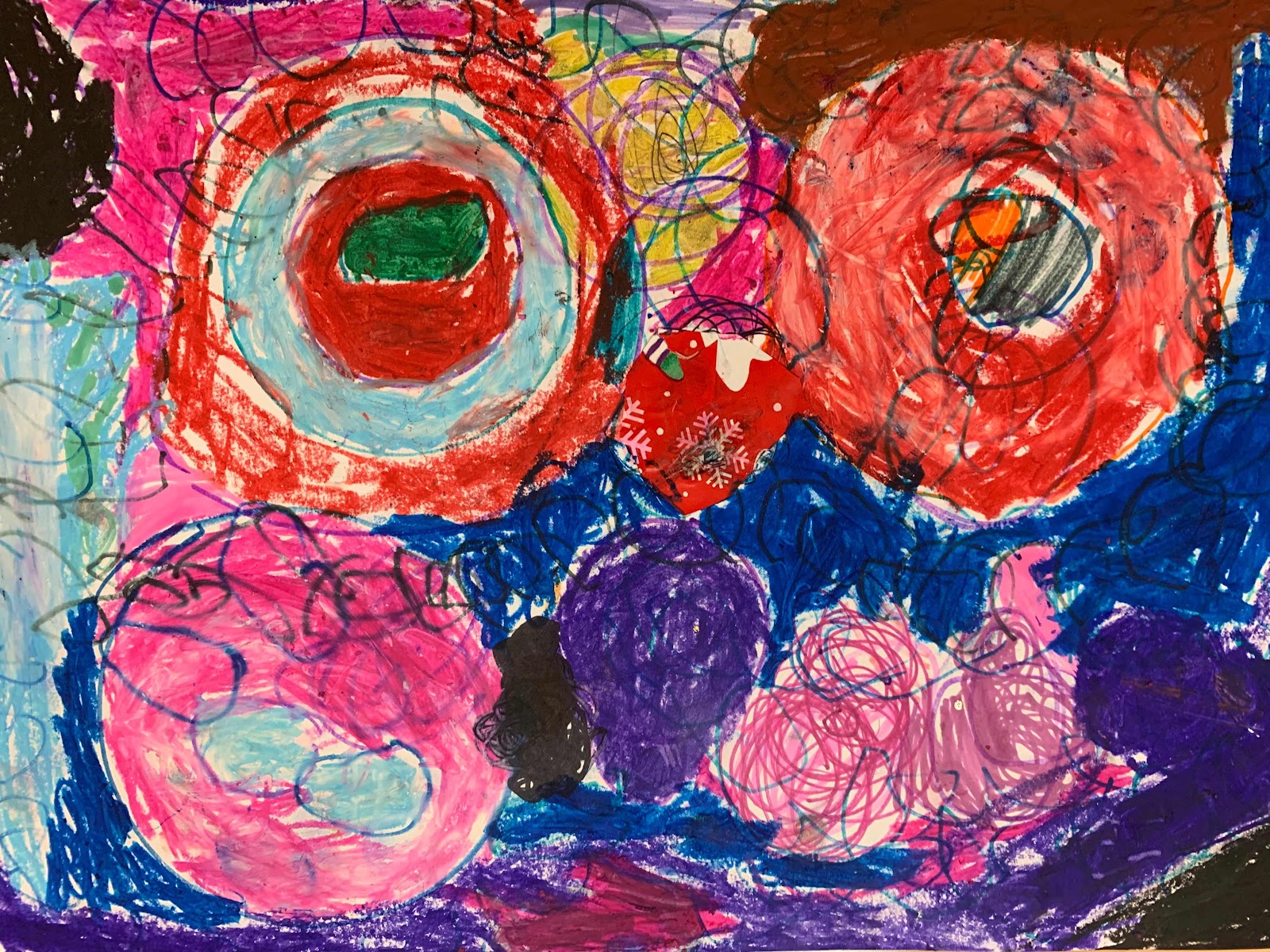
We began by listening to the book, The Dot in Spanish and looking at the art of Kandisnky, Kusama and Sonia Delauney, 


although students in K, 2 and 4th (the grades I work with) did similar framework, the expectations were very different for each. Plus, the materials they had access to were also drastically different. 
Kinders primarily made circles, worked on how to color using various media and also learned how to make various things by combining and using circles. 


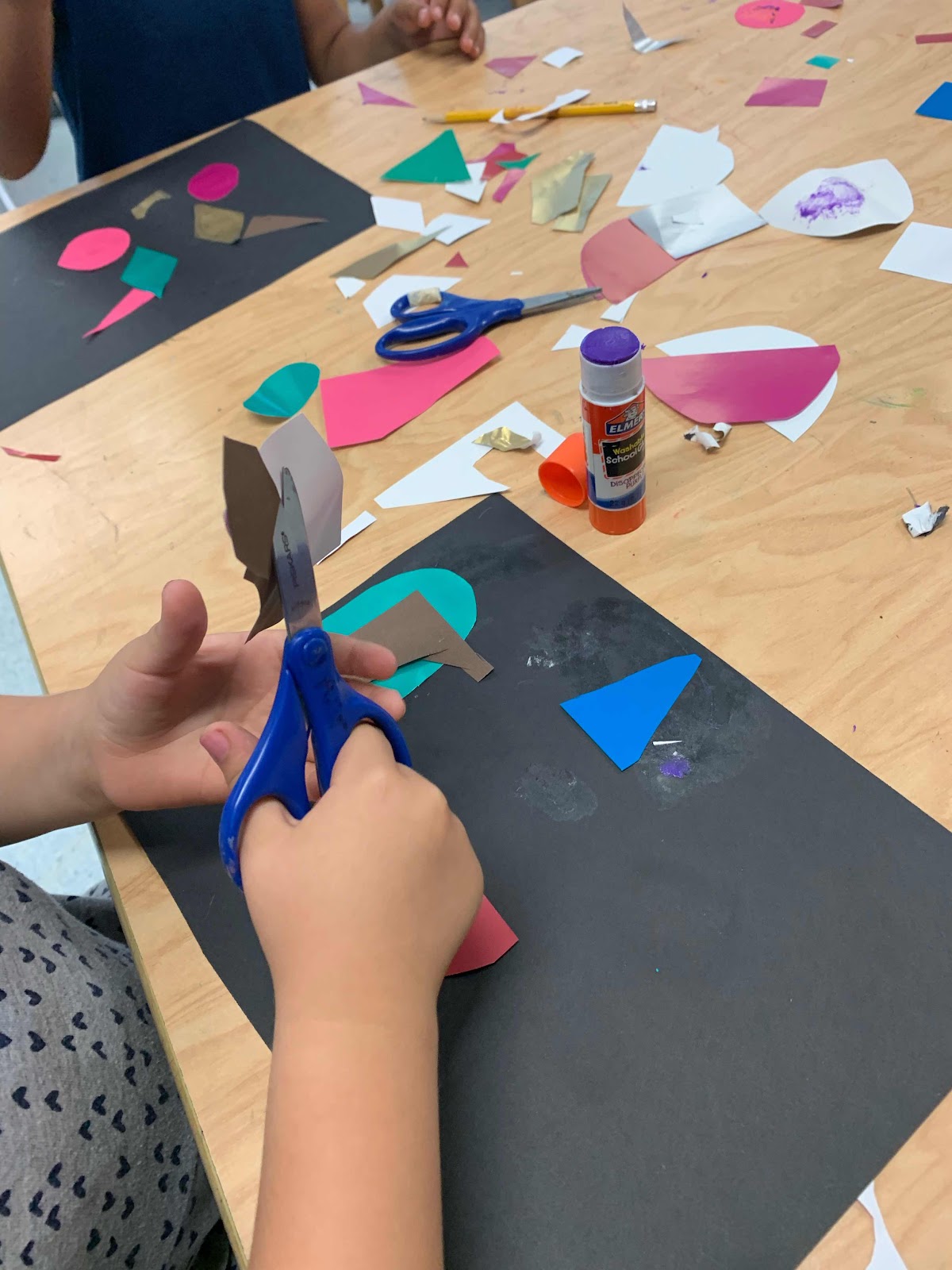
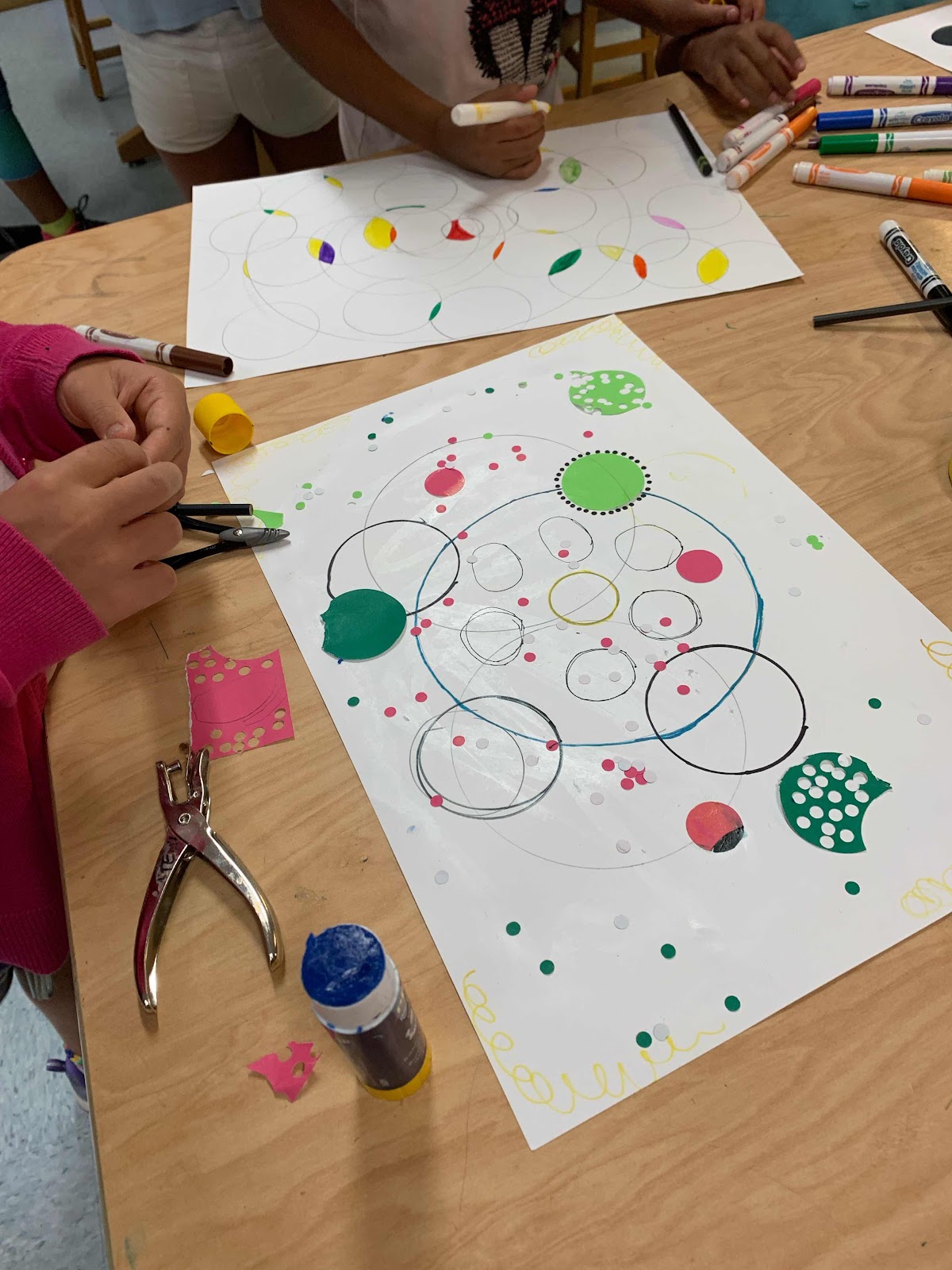
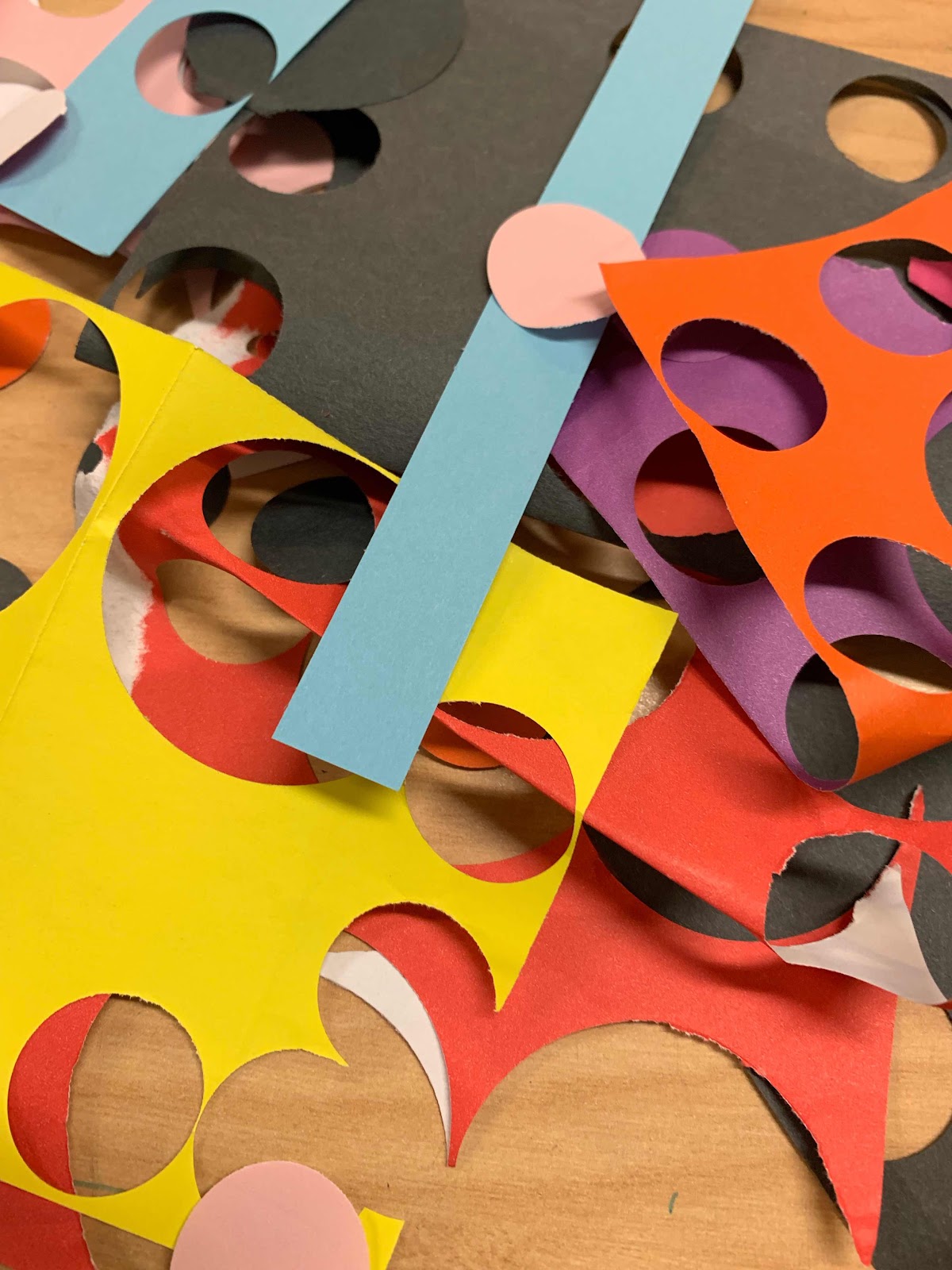
2nd graders had access to every material kinder did plus hole punchers, circle stickers and the Fiskars circle squeeze punchers of two sizes. Having collage as an additional option really was exciting to students. 

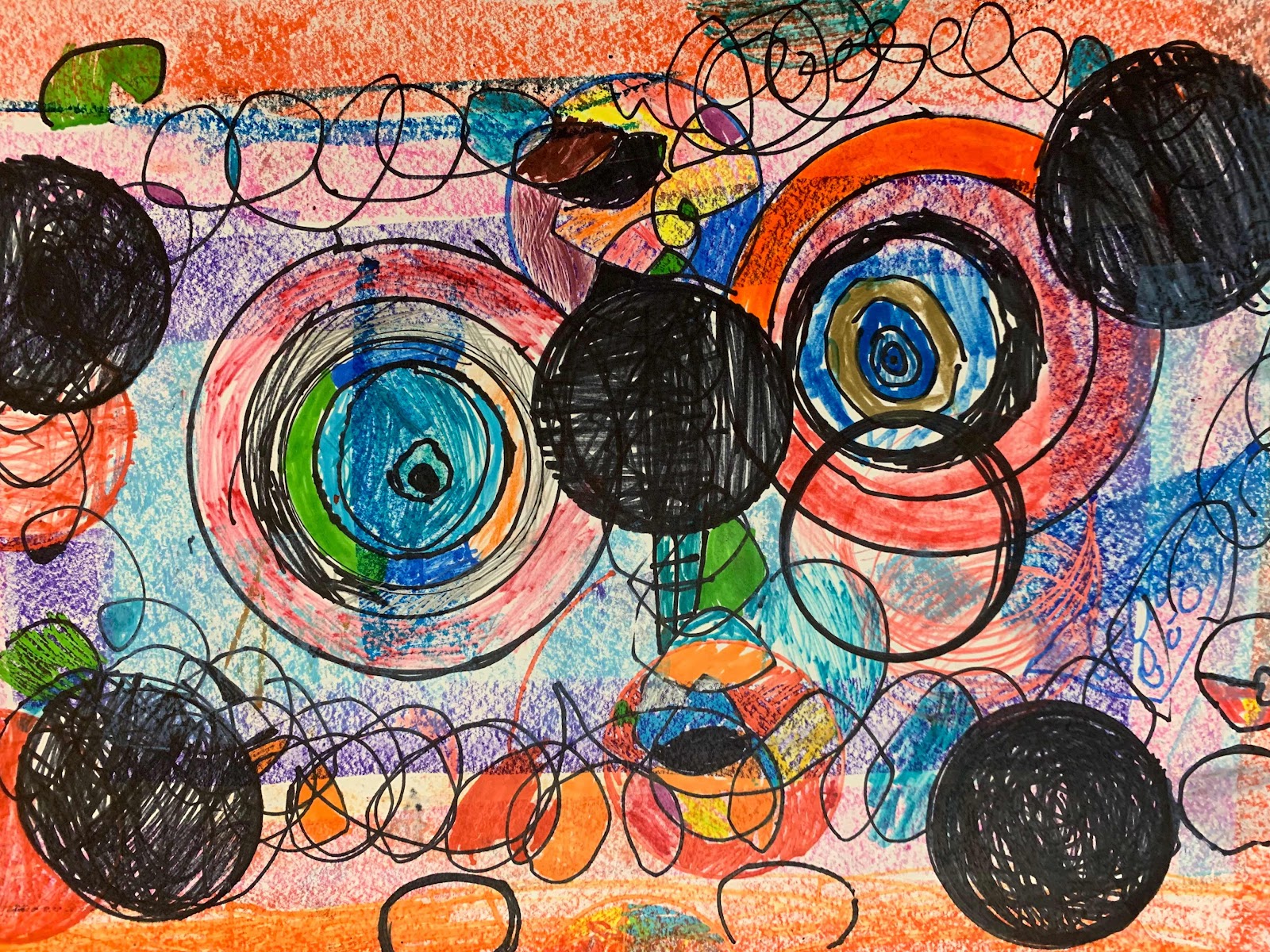
4ht graders had same materials K and 2nd graders had but also had two types of compasses. 

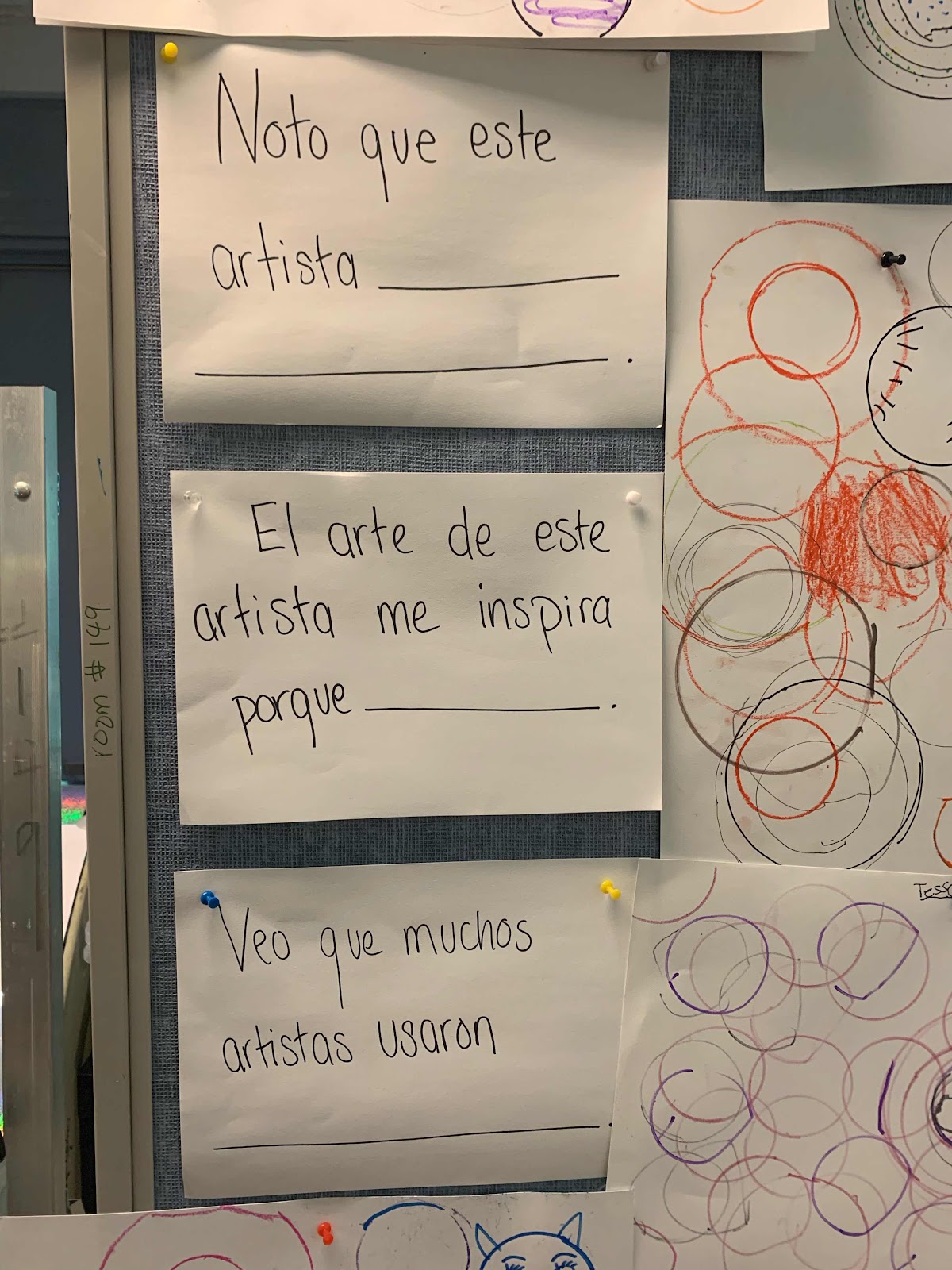
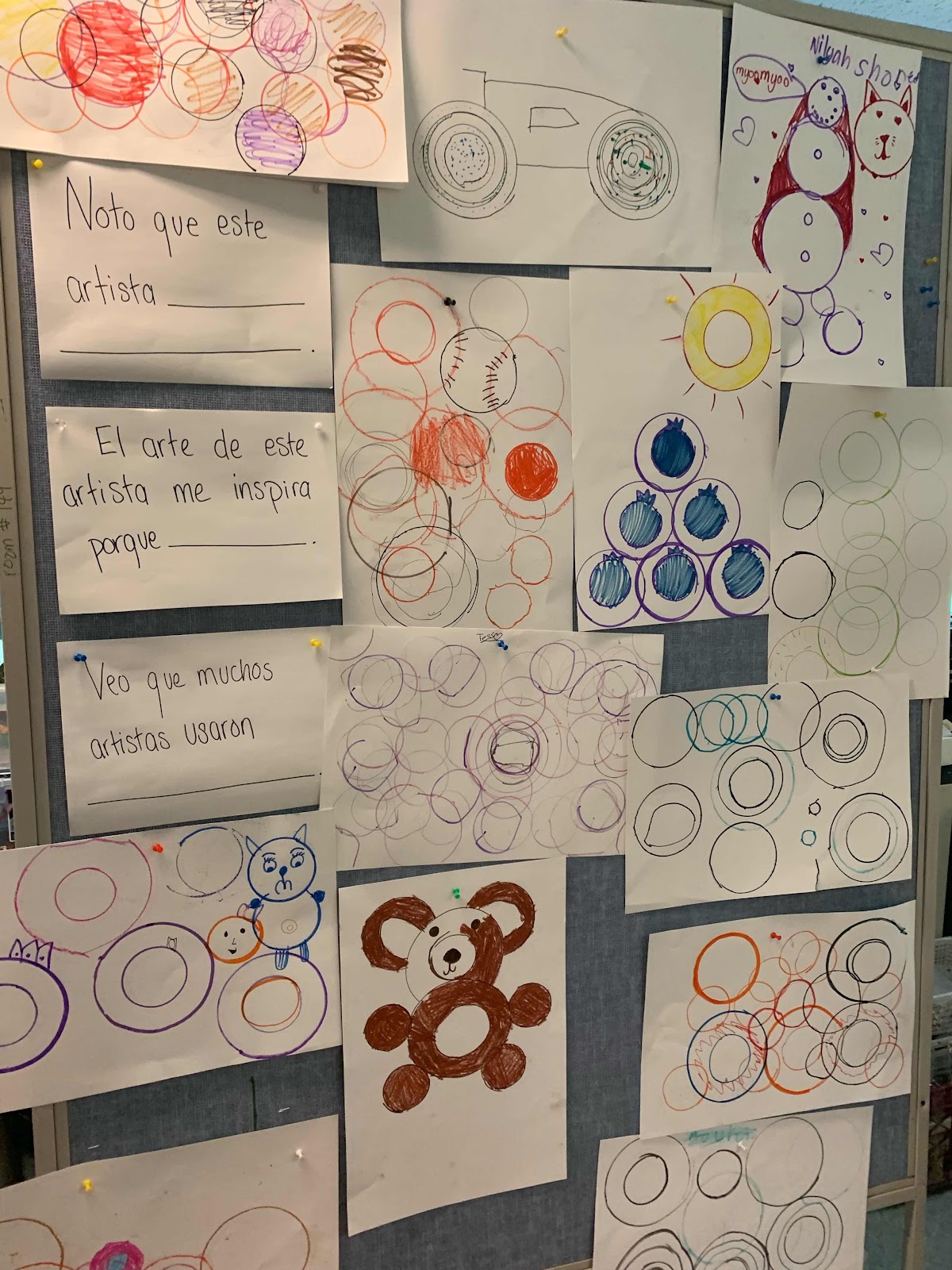
During the second lesson, for 2nd and 4th, I hung all work on my display board and on a line held by clothing pins and we practiced noticing what we see in each other's work. Students were asked to go back to their work after the gathering and choose one items in another's work that inspired them and to use that idea in their own work. 

I began the discussion lesson by demonstrating using the first sentence starter, which is only "I notice this artist_____". I then asked students to do the same. We then learned to identify ideas that inspire us by identifying which ideas we gravitate towards. We
learned that in art it's not called "stealing", it's called "inspiration". I emphasized that no matter how much one tried one could not truly copy the idea for we are all uniquely different and my version will always be different by that very premise. 

 that

A great measure of how much creativity went into a class project is seeing just how different each one is. The more you do this the more each student begins to feel proud of the work they do.... and value their ideas. 


punchers.....they made the most beautiful collage material. 

     When you allow students to work on their own ideas they are focused, alert, engaged. Behavior management is never an issue either when students are working on solving interesting and personal meaningful problems. 

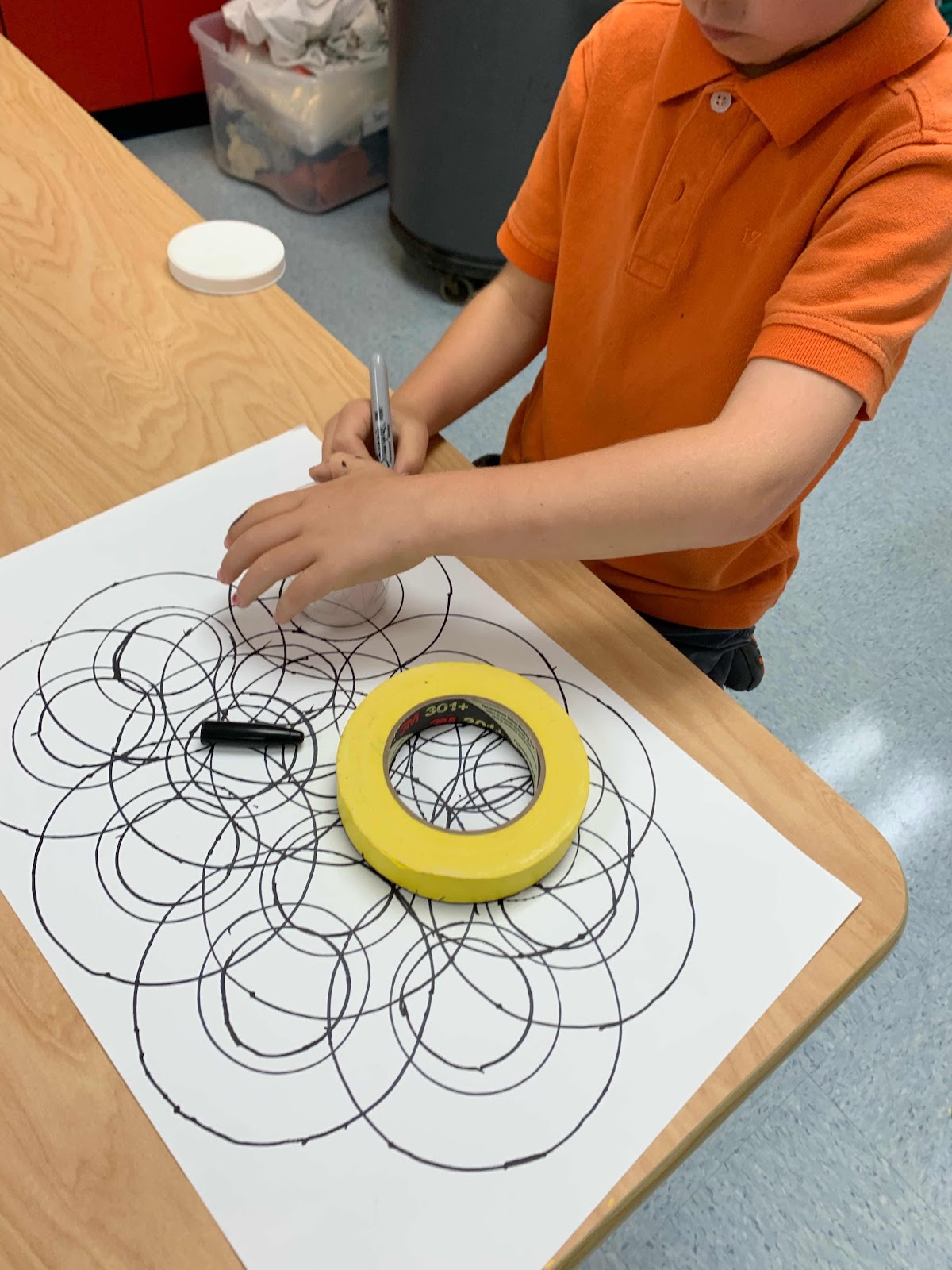
An extension I did for my younger kids is using the masking tape rolls to make simple drawings. One of my goals for kinder is learning to combine simple shapes to make recognizable things... I was so proud of their work. 

This is a butterfly....


a bird.


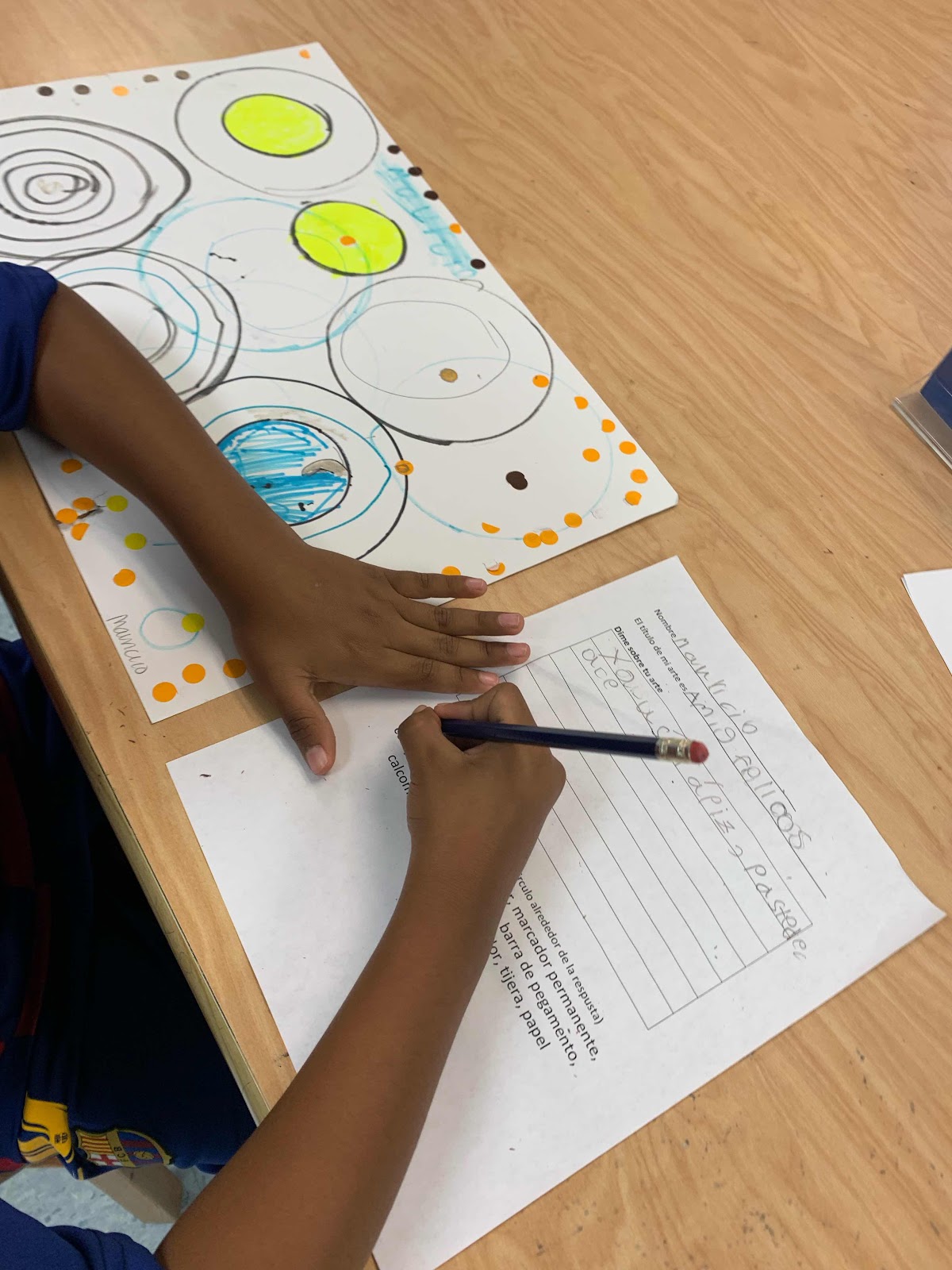
these are sample finished work by 4th graders. Each one has a personally meaningful narrative which they will get to write about in the next class. Narratives do not lead the work, they are often generated as the work is being created. A shape might remind them of something and that's how they take off and build the work around that one initial inspirational idea. 


6/7/19

Kindergarten drawing Assessments

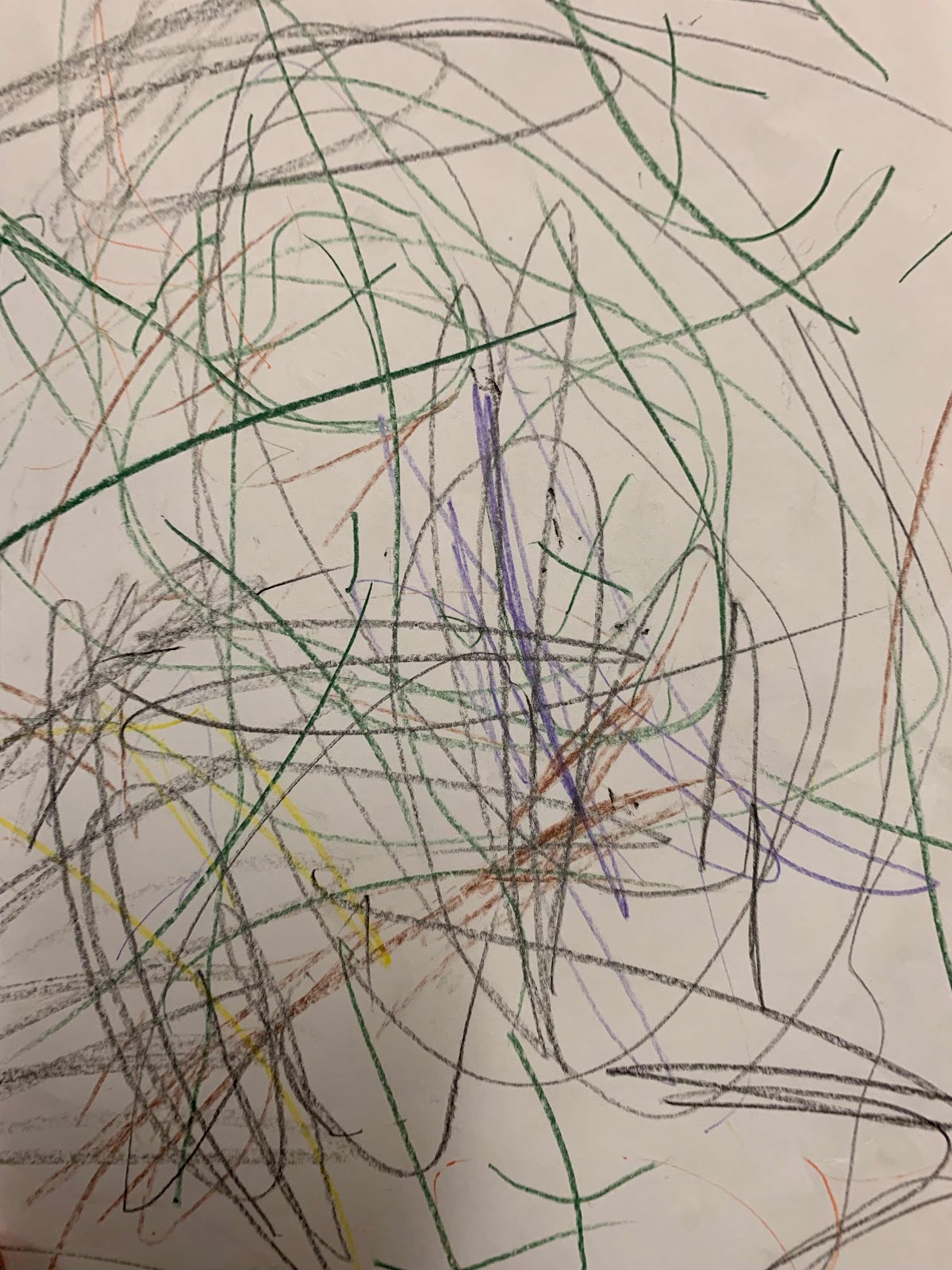
Child #1 beginning of the year drawing 

Child #1 Middle-of-year drawing of human body


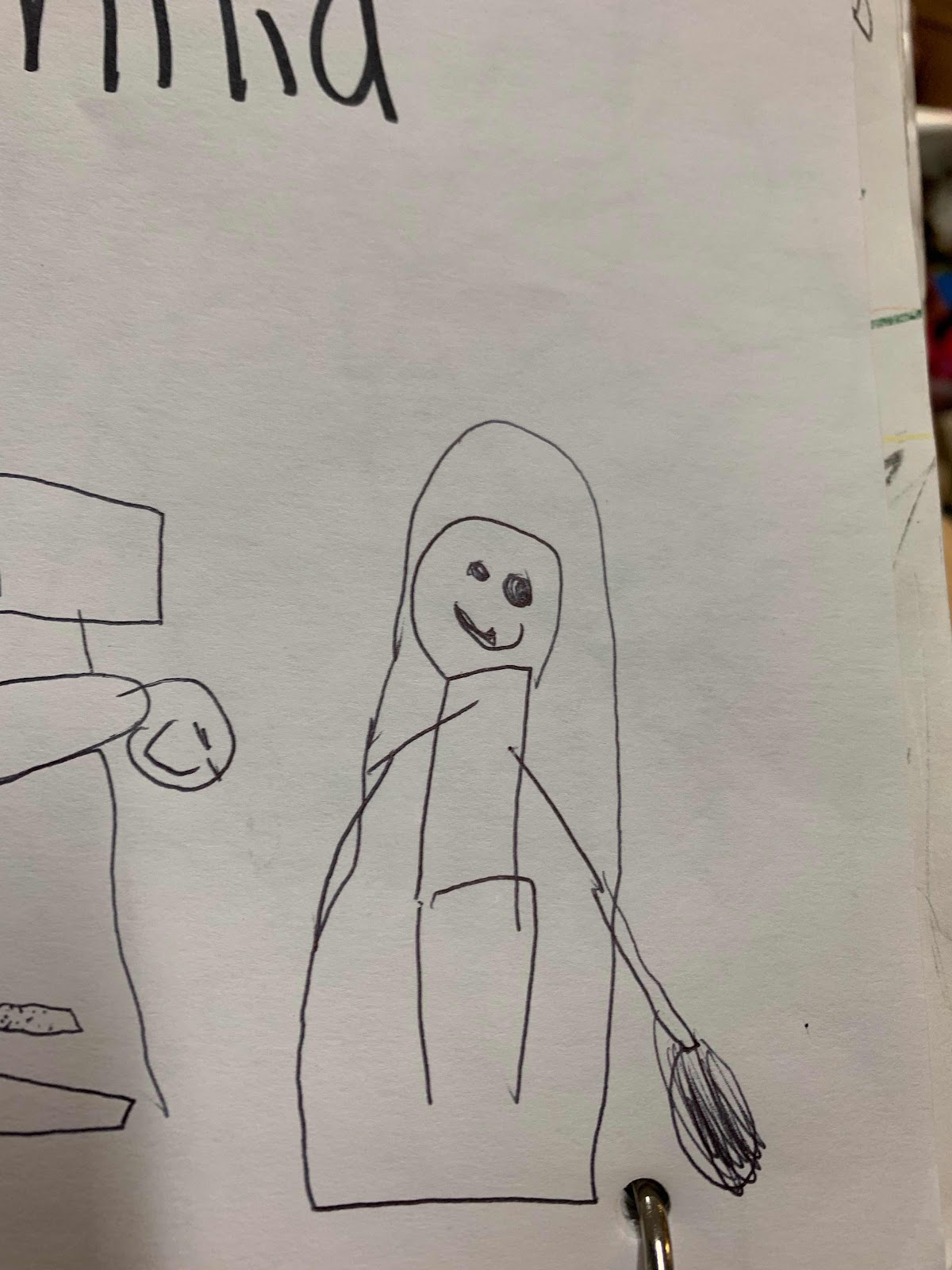
Child #1 end-of-year drawing of human body. 


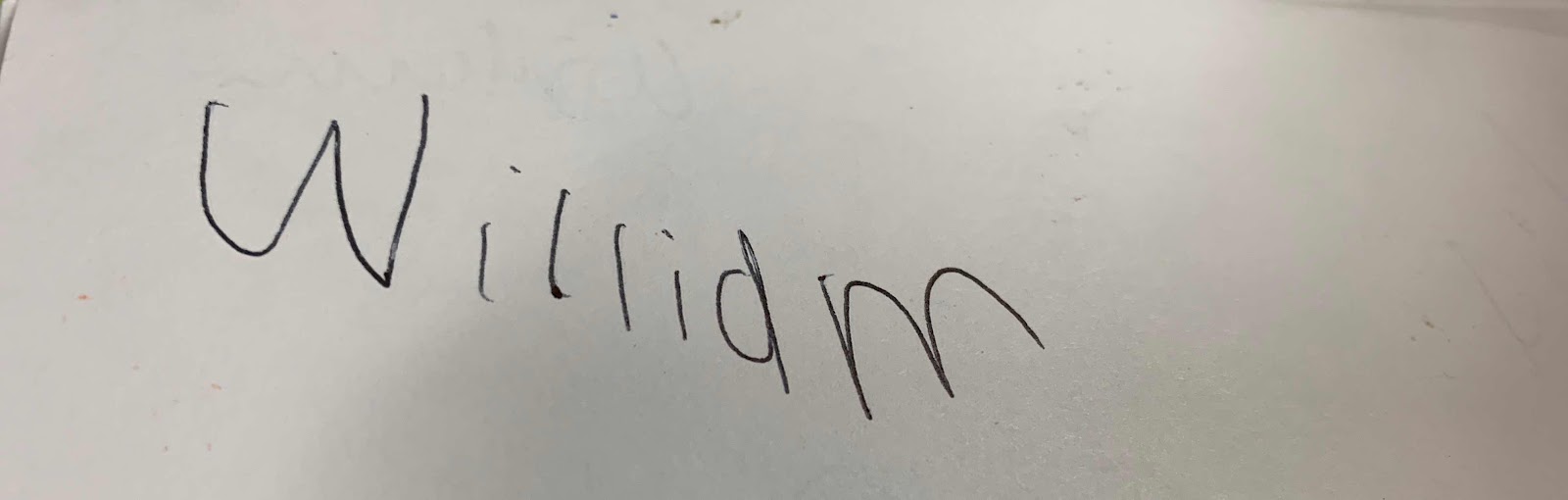
Child #2 (below) could not write his name at the beginning of the year. Teacher wrote his name of him. After working on drawing lines, shapes and exploring them with varying media, he is now able to write his name very well. 


Child #2, finally wrote his own name.....looks very nice considering he started the year not having the confidence to even try. 


Child #3 blew me away! his beginning year drawing and below that a snippet from his family portrait at the end of the year. I cannot be more excited about my choice-based program and all the progress this form of teaching allows the students to gain. 


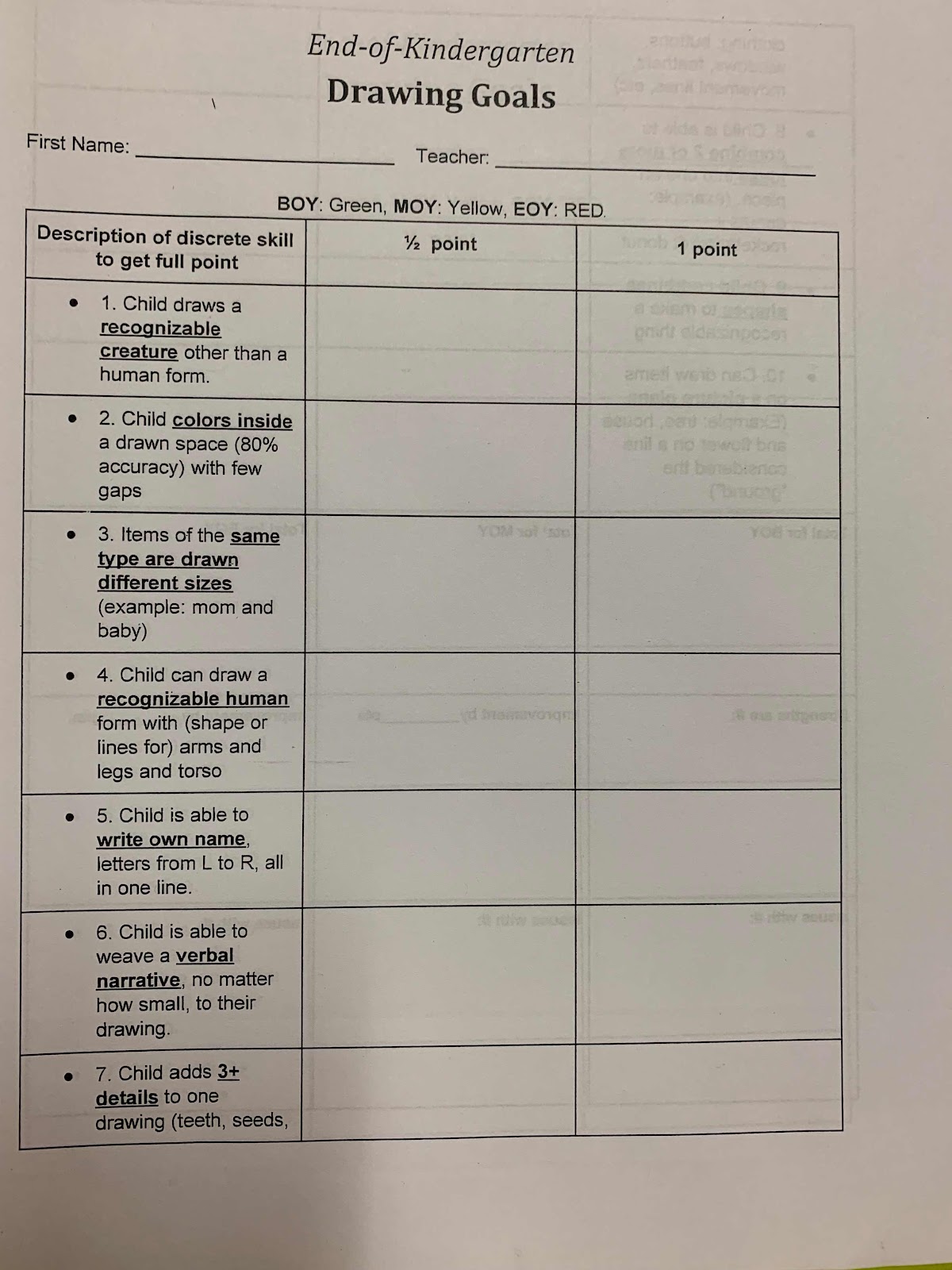
I keep track of their drawing skills via a rubric I created last year. The rubric lists various skills all kinder should be able to achieve by the end of kindergarten. It has fine motor skills as well as come cognitive ones. 


5/24/19

Art Teacher tips


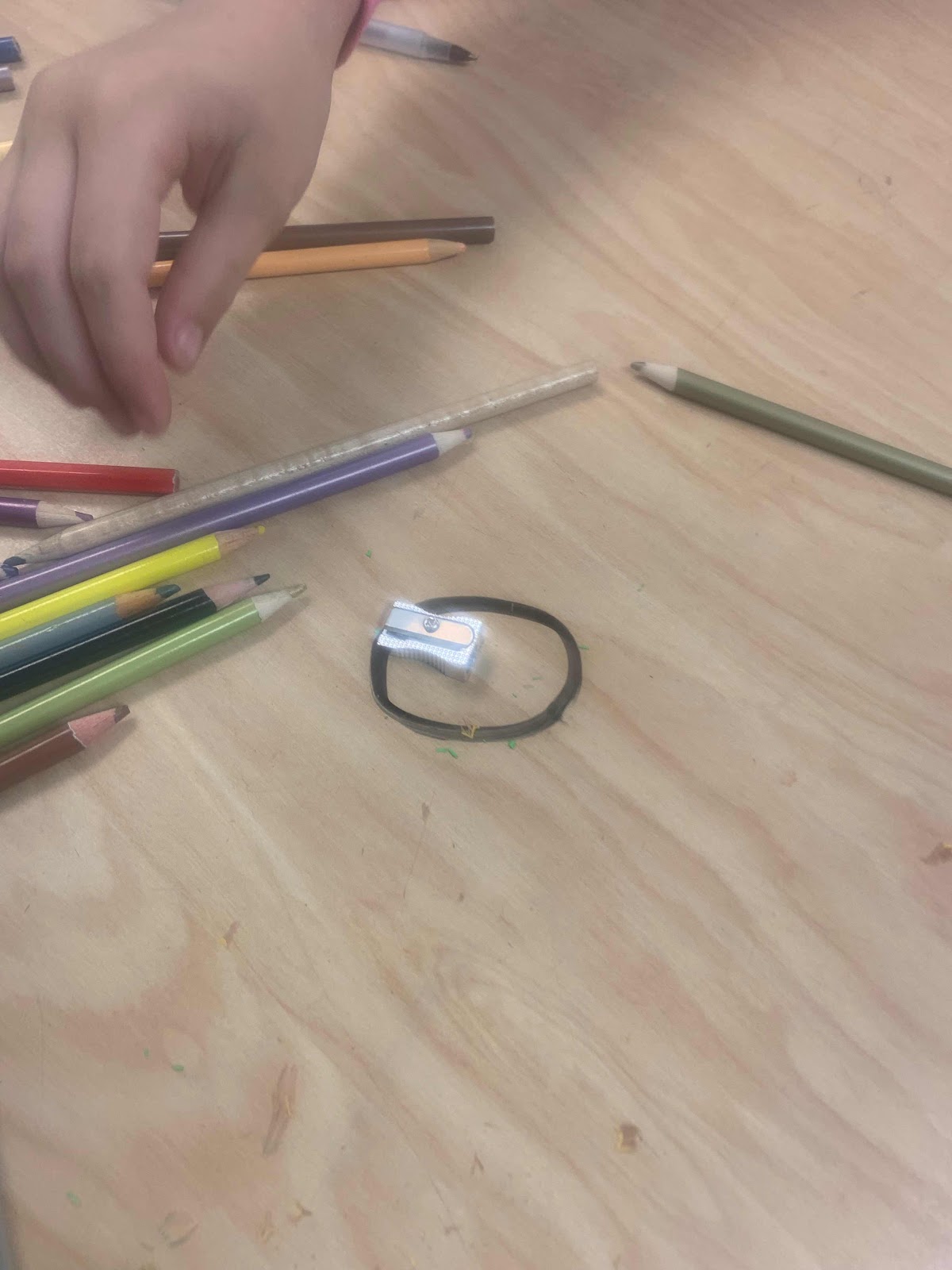
Giving your pencil sharpeners a “home” at every table by using a dry eras marker. This allows students to freely sharpen when needed end it adds accountability for at the end you should have as many sharpeners as you have tables.  #artteacherlife #artteachertips #drawing