Showing posts with label science connections. Show all posts
Showing posts with label science connections. Show all posts


9/28/21
9/18/21
Day 3: Domino Adventures
Domino adventure
In 2nd grade and 4th grade we have been inspired by the work of domino artist, Lily Hevesh. Lily Hevesh is a the only world famous female domino artist. We started this unit exploring dominoes. Next, we practiced some more complex domino skills. We learned some science concepts such as chain reaction, velocity and gravity and also learned some math concepts such as parallel and how to build incrementally for ultimate success during toppling. Students use their personal devices to record either their creation process or their toppling of their dominoes on camera. Aside from the obvious math and science connections, student also learned to work in teams, resolve conflicts and discuss various possible approaches to building. What’s next? Well, depending on the students’ enthusiasm we might work on larger creations. We have also begun imagining the possibility of a schoolwide involvement in dominoes. No matter what, keep in touch with what is happening by either following Mrs. Cutelis on twitter @CutelisART or via her blog at www.cuteliart.blogspot.com.
Aventura dominó
En los grados 2nd y 4th nos hemos inspirado por las obras de dominó de la artista Lily Hevesh. Lily Hevesh es la única artista dominó mundialmente famosa. Comenzamos esta unidad explorando el dominó. A continuación, practicamos algunas habilidades de dominó más complejas. Aprendimos algunos conceptos científicos tales como reacción en cadena, velocidad y gravedad y también aprendimos algunos conceptos matemáticos tales como paralelo y cómo construir las piezas incrementalmente para un derrocamiento más exitoso. Los estudiantes utilizan sus Ipads personales para registrar su proceso de creación los varios derrocamiento de sus creaciones de domino. Aparte de las conexiones obvias de matemáticas y ciencias, los estudiantes también aprendieron a trabajar en equipos, resolver conflictos y discutir varios enfoques posibles para construir. ¿Qué es lo siguiente? Bueno, dependiendo del entusiasmo de los estudiantes, podríamos trabajar en creaciones más grandes y complicadas. También hemos comenzado a imaginar la posibilidad de una participación escolar en dominó. Pase lo que pase, manténgase en contacto con lo que está sucediendo por siguiendo a la Sra. Cutelis en Twitter @CutelisART o a través de su blog en www.cuteliart.blogspot.com.
https://youtu.be/cIvftm0vLwU
9/15/21
day 2-3 domino adventure
Domino adventure
In 2nd grade and 4th grade we have been inspired by the work of domino artist, Lily Hevesh. Lily Hevesh is a the only world famous female domino artist. We started this unit exploring dominoes. Next, we practiced some more complex domino skills. We learned some science concepts such as chain reaction, velocity and gravity and also learned some math concepts such as parallel and how to build incrementally for ultimate success during toppling. Students use their personal devices to record either their creation process or their toppling of their dominoes on camera. Aside from the obvious math and science connections, student also learned to work in teams, resolve conflicts and discuss various possible approaches to building. What’s next? Well, depending on the students’ enthusiasm we might work on larger creations. We have also begun imagining the possibility of a schoolwide involvement in dominoes. No matter what, keep in touch with what is happening by either following Mrs. Cutelis on twitter @CutelisART or via her blog at www.cuteliart.blogspot.com.
Aventura dominó
En los grados 2nd y 4th nos hemos inspirado por las obras de dominó de la artista Lily Hevesh. Lily Hevesh es la única artista dominó mundialmente famosa. Comenzamos esta unidad explorando el dominó. A continuación, practicamos algunas habilidades de dominó más complejas. Aprendimos algunos conceptos científicos tales como reacción en cadena, velocidad y gravedad y también aprendimos algunos conceptos matemáticos tales como paralelo y cómo construir las piezas incrementalmente para un derrocamiento más exitoso. Los estudiantes utilizan sus Ipads personales para registrar su proceso de creación los varios derrocamiento de sus creaciones de domino. Aparte de las conexiones obvias de matemáticas y ciencias, los estudiantes también aprendieron a trabajar en equipos, resolver conflictos y discutir varios enfoques posibles para construir. ¿Qué es lo siguiente? Bueno, dependiendo del entusiasmo de los estudiantes, podríamos trabajar en creaciones más grandes y complicadas. También hemos comenzado a imaginar la posibilidad de una participación escolar en dominó. Pase lo que pase, manténgase en contacto con lo que está sucediendo por siguiendo a la Sra. Cutelis en Twitter @CutelisART o a través de su blog en www.cuteliart.blogspot.com.

10/30/19
Kindergarten painting unit
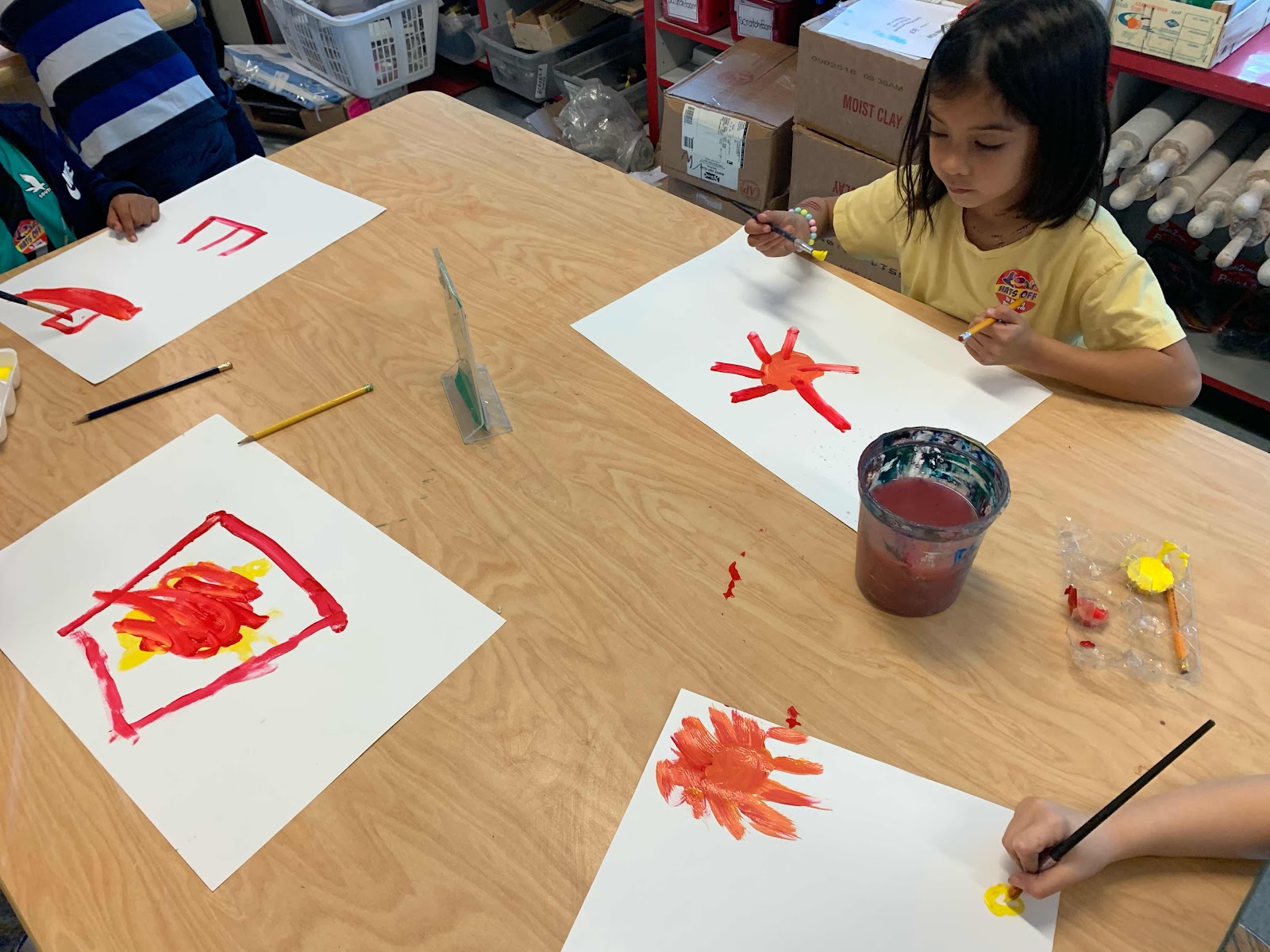
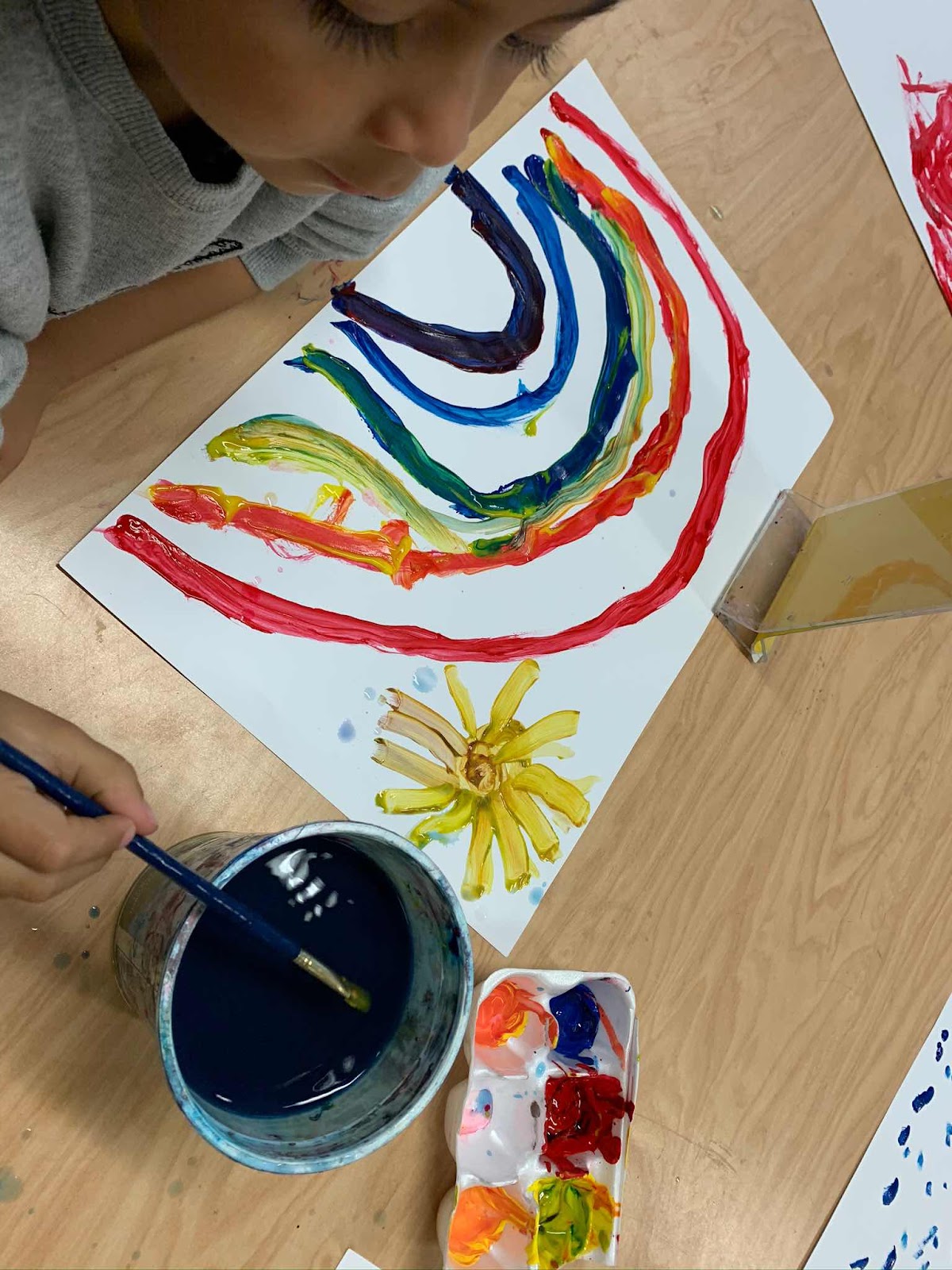
All my kindergarten painting units begin with color mixing exploration. We take things super slow. In order to use the palettes again and again over time I must first teach kids to mix their colors only on their papers and not in the palette.
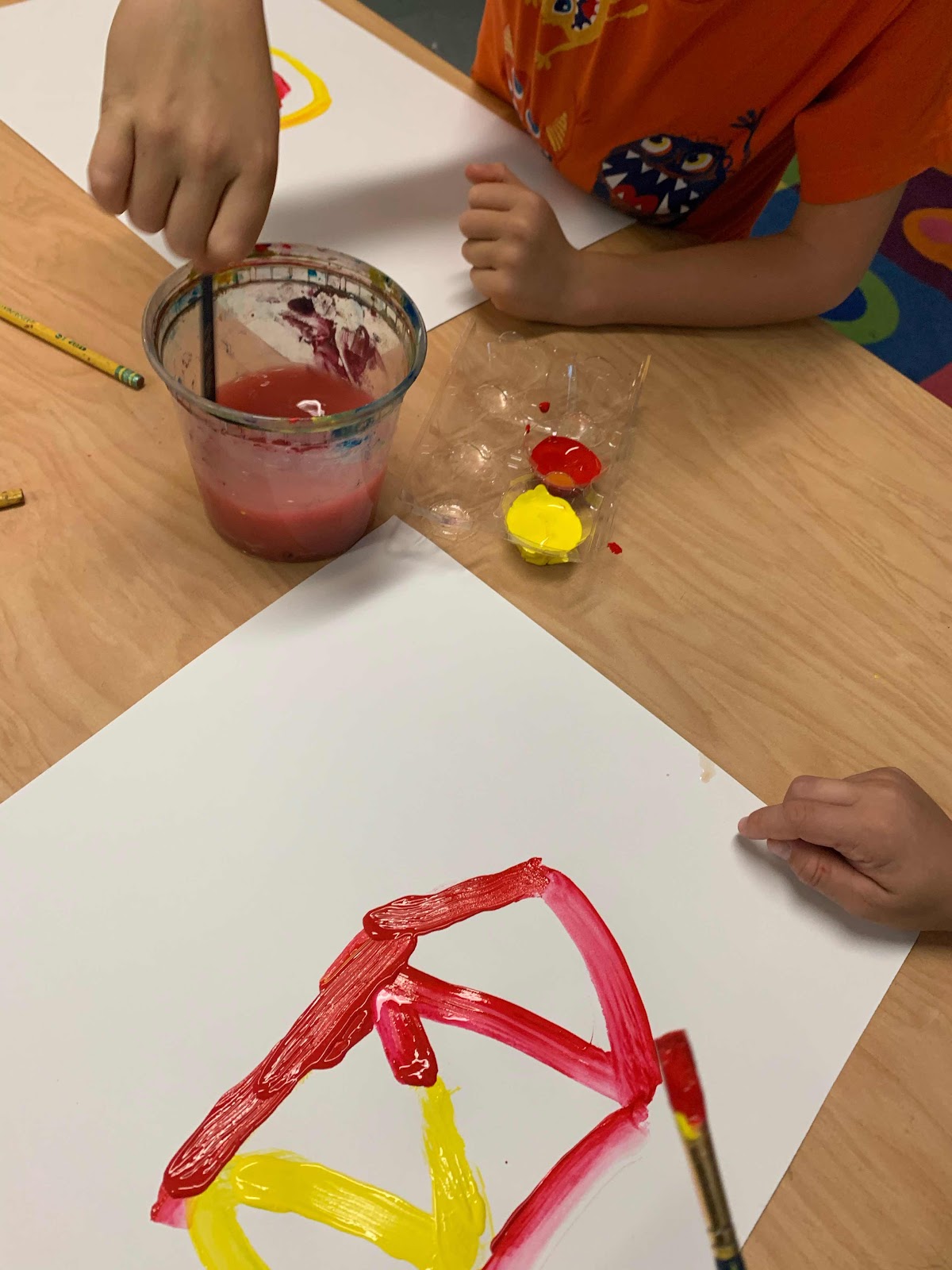
incidentally learning how to make orange is MUCH more powerful than me telling them.

I purposely ONLY use clean plastic containers for that way students also see that the colors mix in the water as well, as they wash their colors away. Sometimes this is more fascinating than painting, and that is okay too.

The next day they get THE SAME painting...you heard it....THE SAMe PAINTING again. Some kids will try to turn the paper around to paint on the back for they have not yet been taught that once dried, the surface can be painted again. This new revelation is very fun for the students. I make sure all students have thin brushes and a 12x18 paper. This keeps them neat, and the space they use this time effectively. Smocks are often not needed, just make sure they have easy reach to the water jars and that they know how to properly wash their brush so as to not tip over the cup.

All students share one palette and one jug of water. If you increase the number of kids sharing these items you will have chaos or water accidents. All items need to be easily reachable and you need to have enough of them for kids to be able to solely focus on their work. Behavior management begins in the planning of where supplies go and how many supplies each kids have access to.
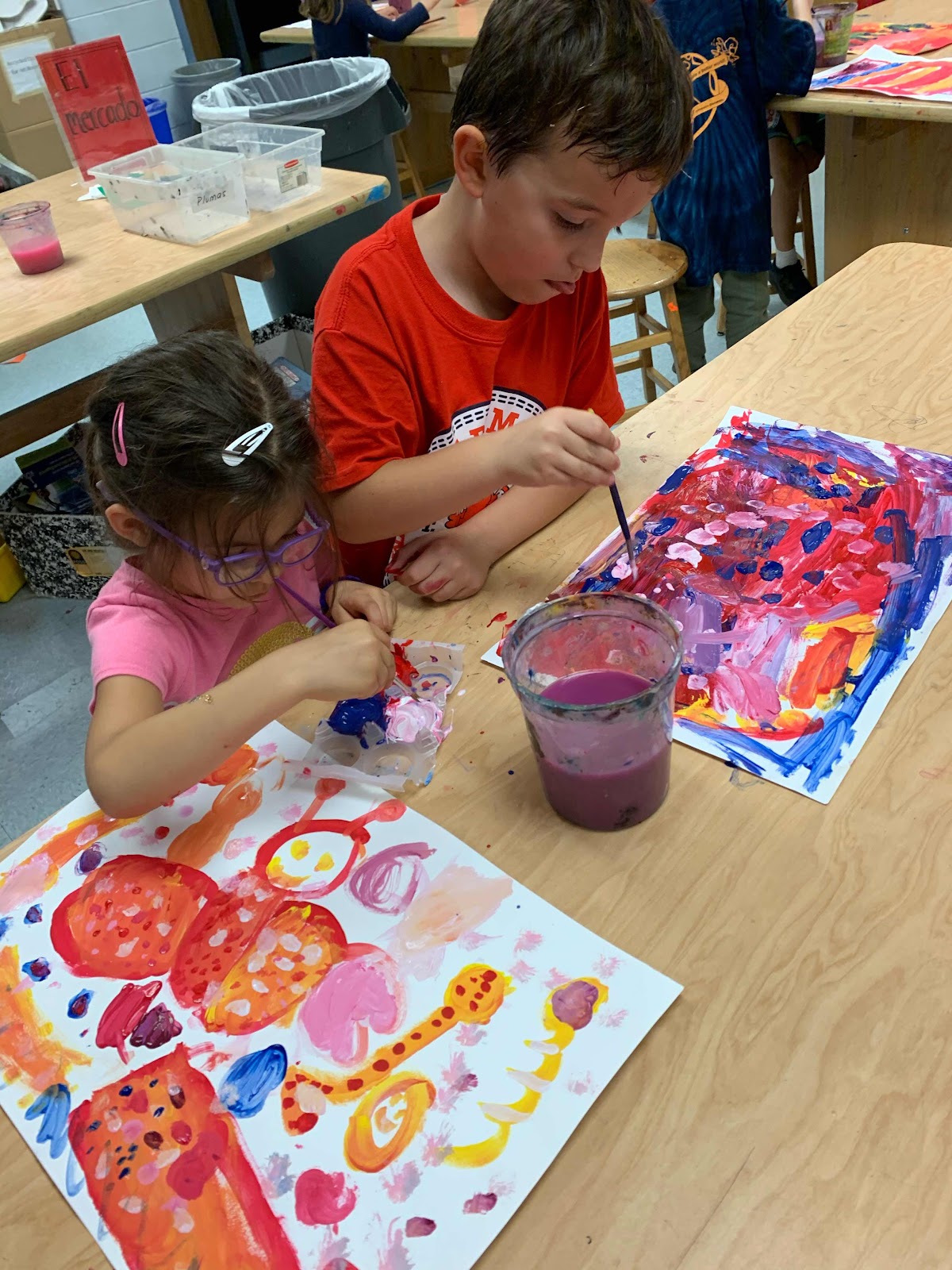
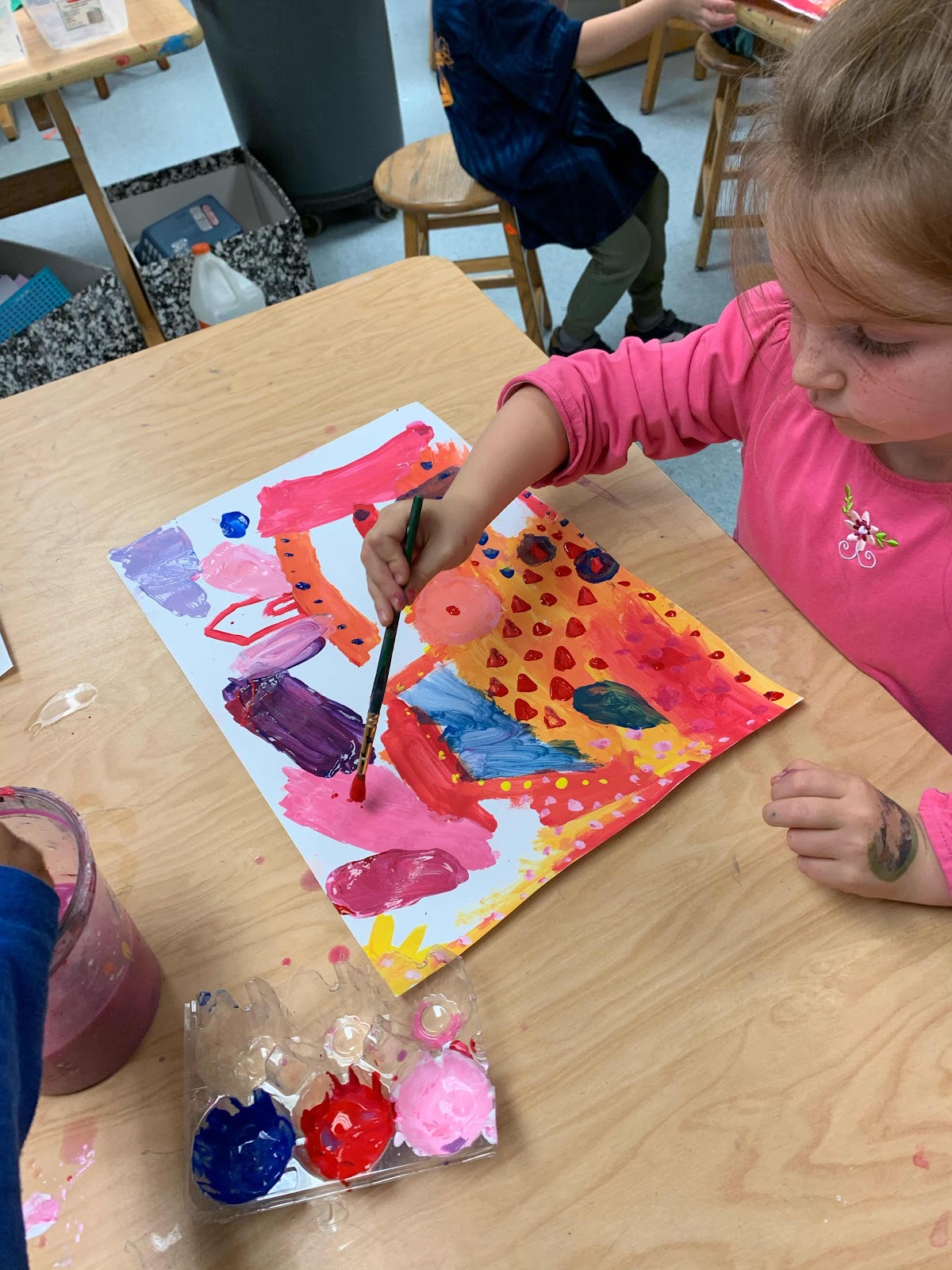
Naturally, students begin using paint to overlap colors.



10/2/19
4th grade painting unit

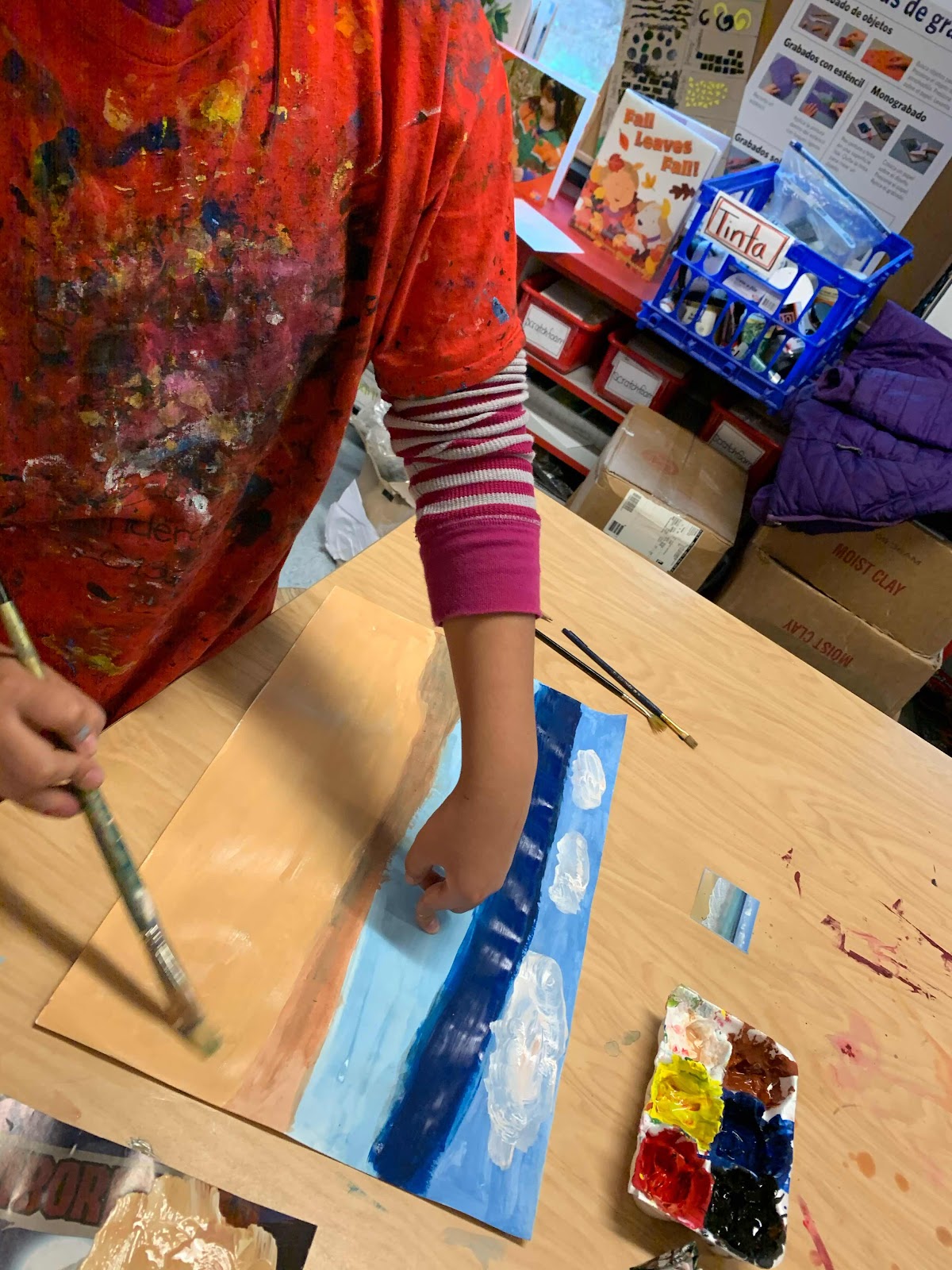
Students in 4th grade (in fact, students in all grades) start all units with exploration. It allows me to take notes on their interests and their level of knowledge on the media. In this case, I noticed students painted in one layer and often did not paint a background. Next week we will look at various famous paintings and try to draw inspiration from them into our own work. I will give them their own paintings again and they will use varied brushes to add more layers, or add details as well as add a background.
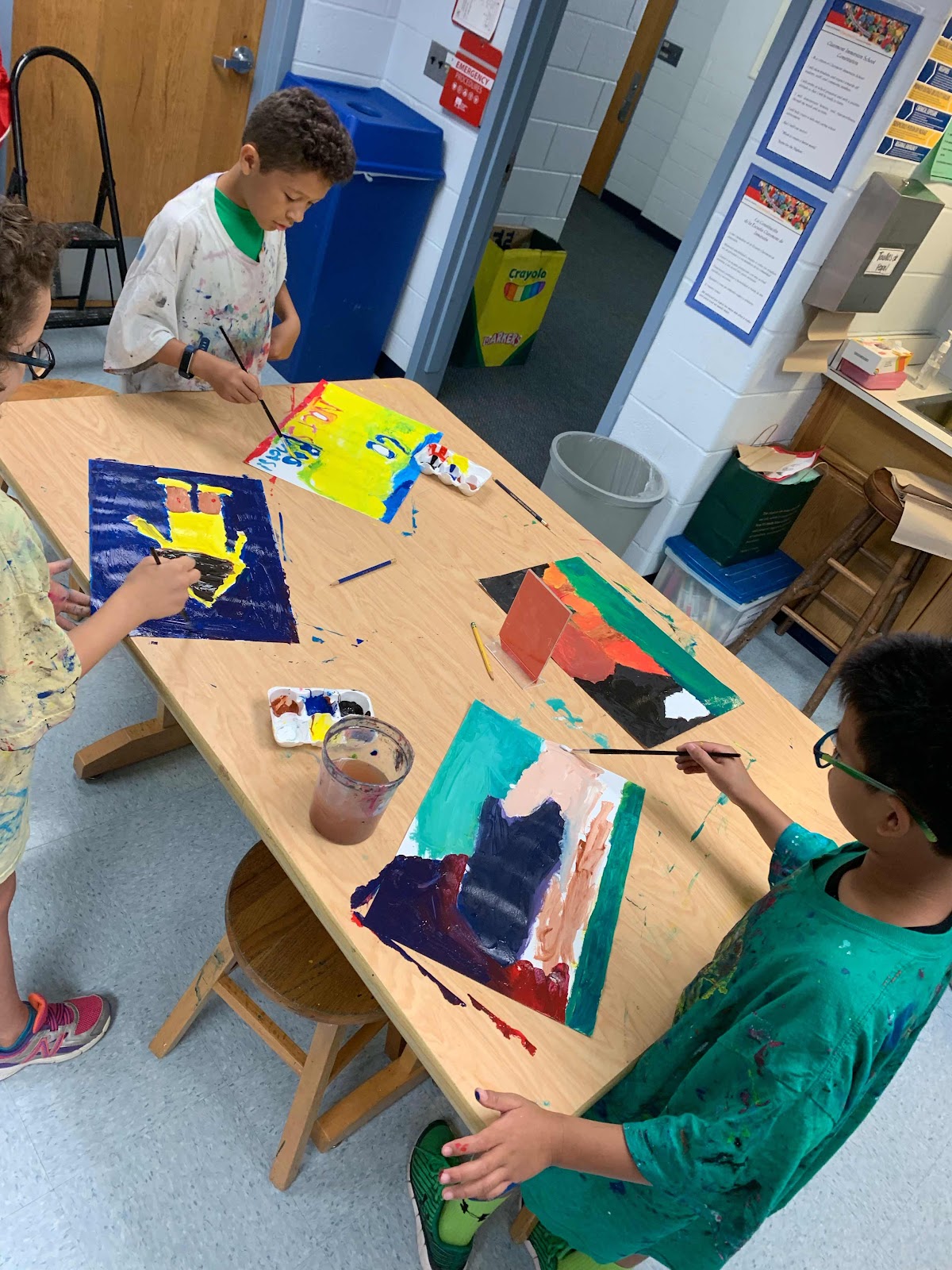

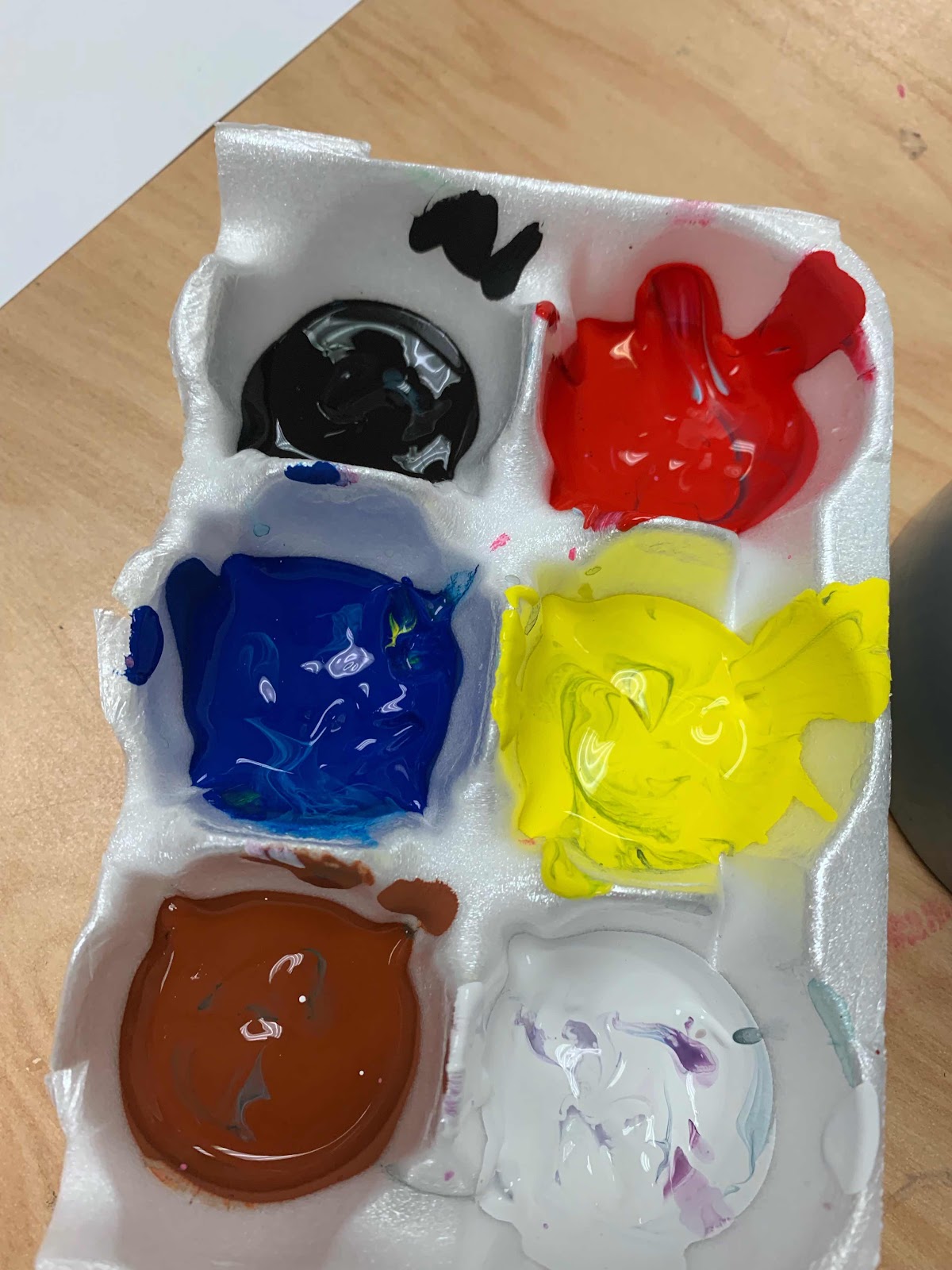
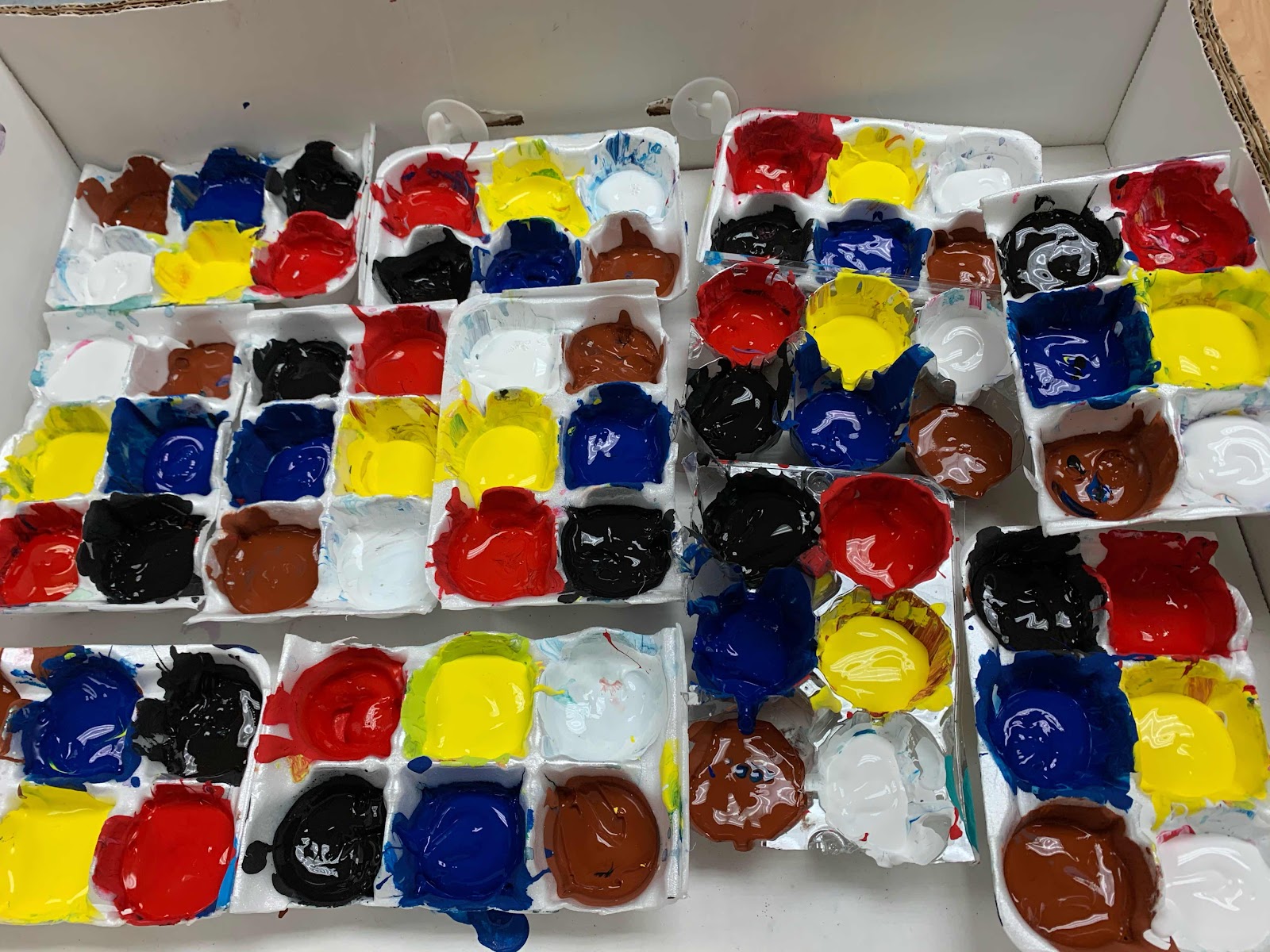
Students get only 6 colors. Black, white, red, blue, yellow and white. The primaries so they could make secondaries. White and black to make tints and shades (lighter and darker versions of colors) and brown, because it's sometimes too hard to mix it. The pink and green you see above, therefore, were mixed before applying to paper. With experience, students learn to manipulate the amounts to get the right color for the expression they seek to make.
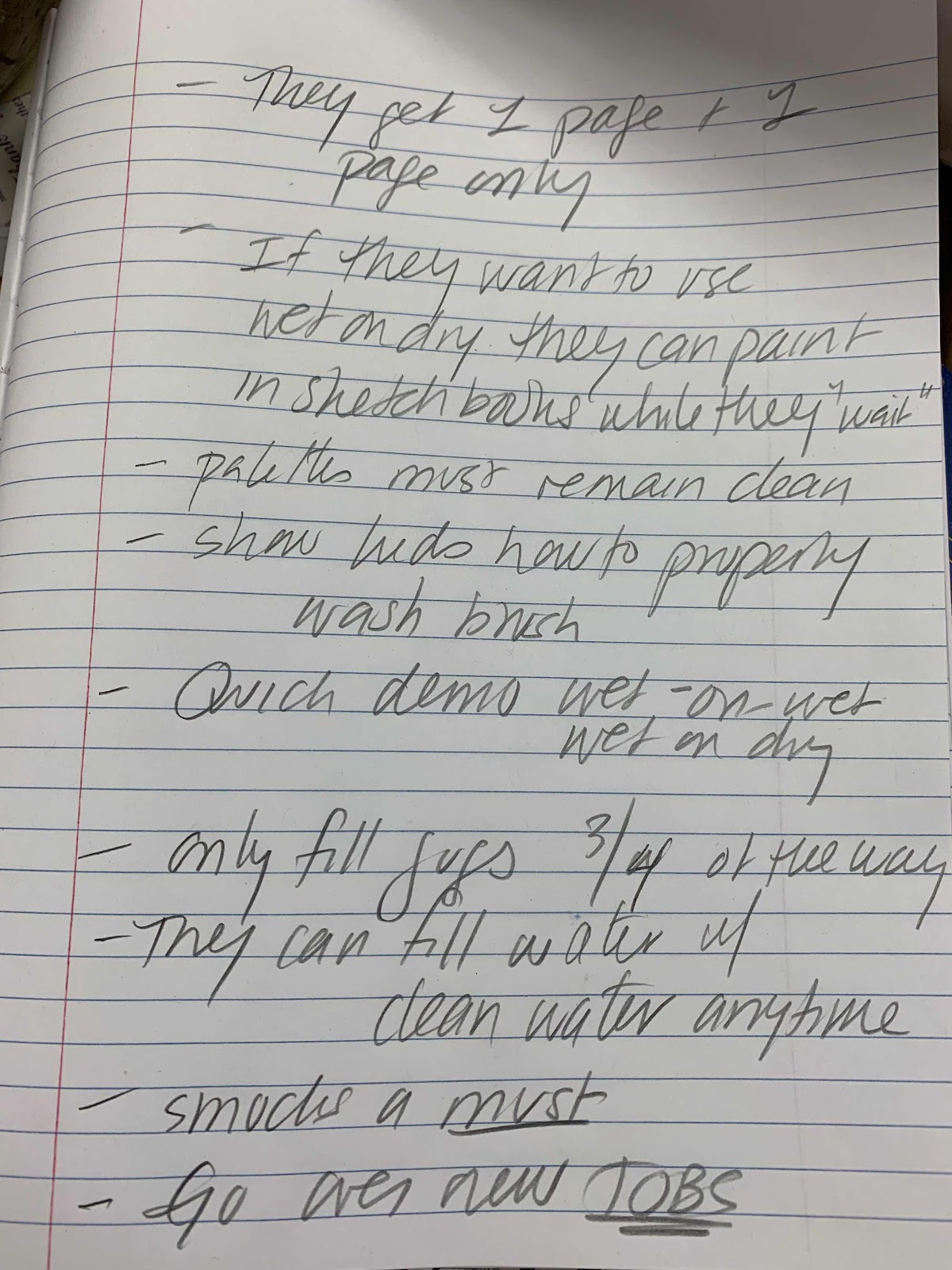 |
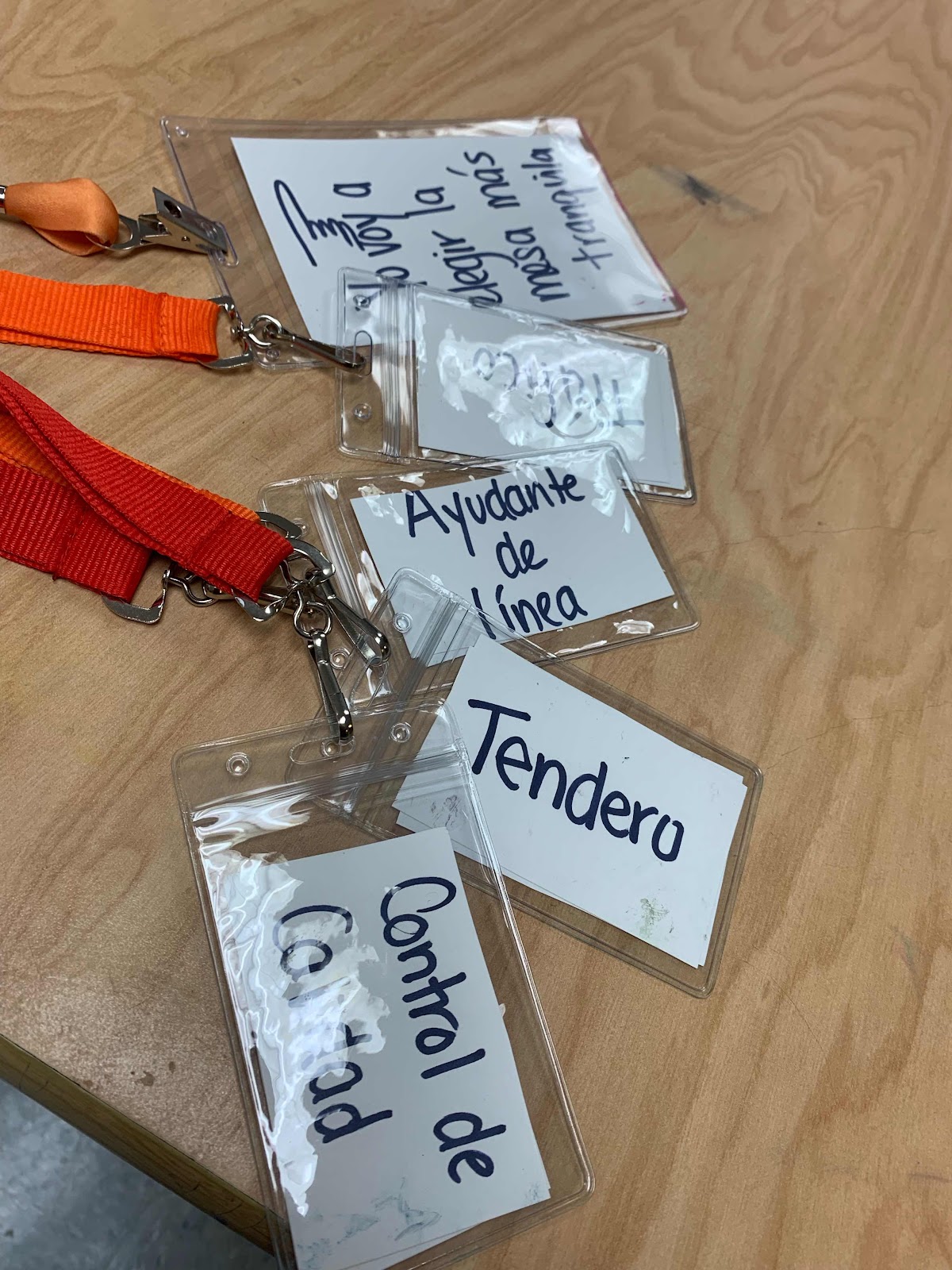
Above I have new jobs for students. I keep track of who did what job and go down the list democratically. Jobs range from traffic control by the drying rack, calling kids to line when quiet to line helper, who call kids in line to back if they are talking while waiting for teacher to arrive for pick-up.
I never tell students what to paint. For kids who are used to just following directions, transitioning to this might be a bit tough, yet, eventually, all students know that when they work with me I fully expect them to come up with their own ideas. I teach them the techniques, but I NEVER say, we will all paint (fill in the blank). That is not art, that is craft.
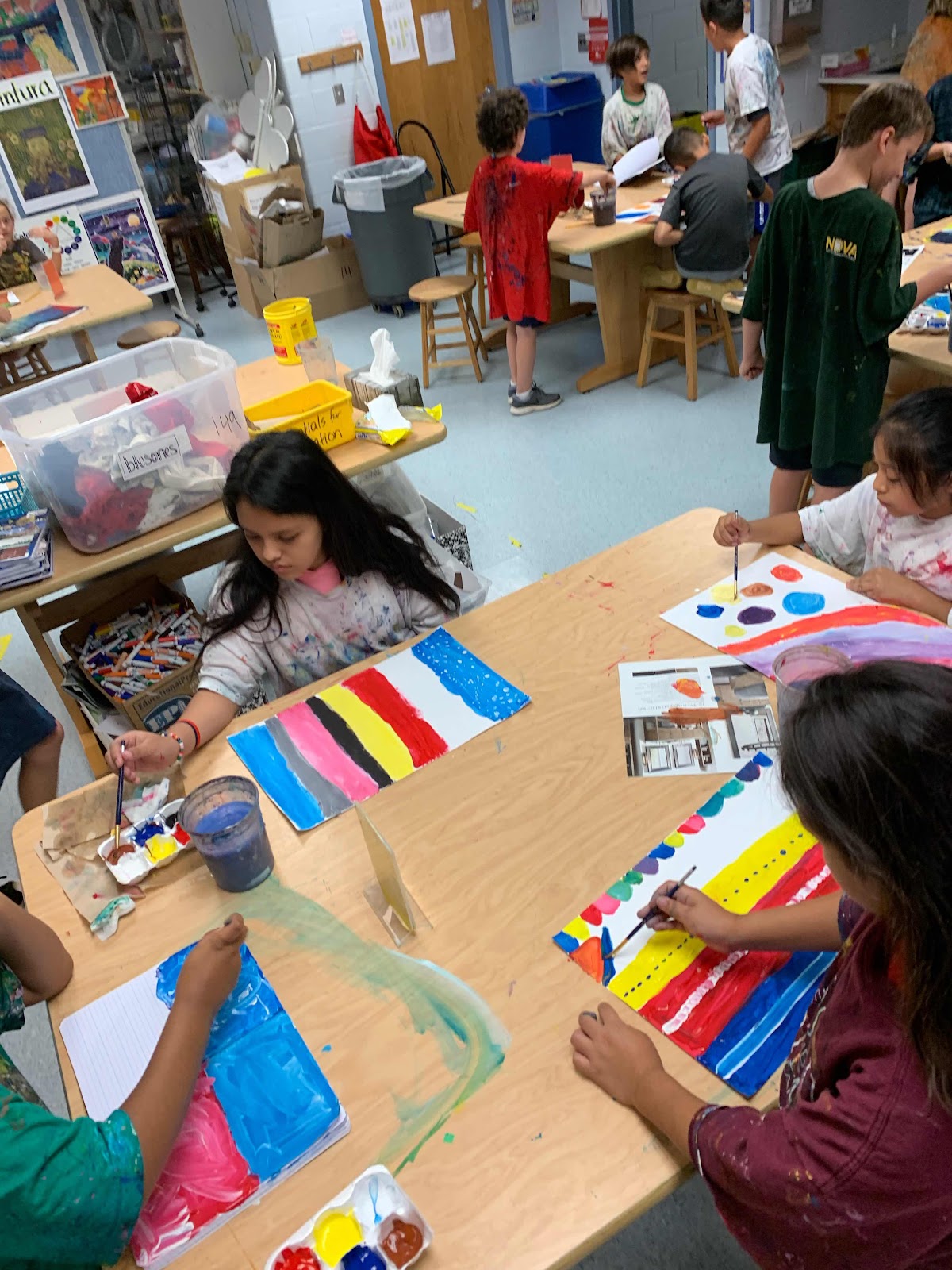
Some students just enjoy mixing colors, that is okay.

Some explore wet on wet techniques, others explore wet on dry techniques.

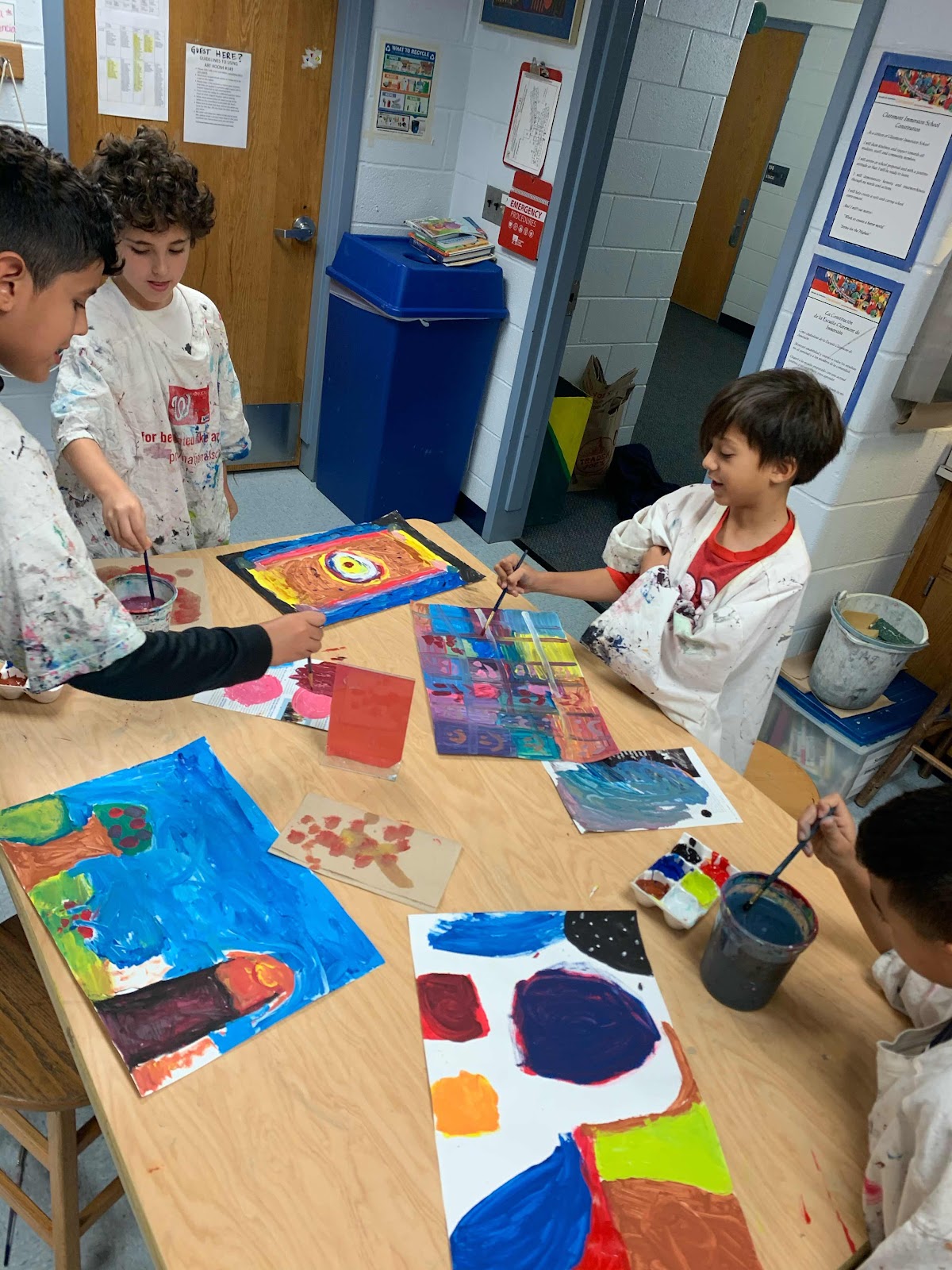
Lots of colors are being invented, mixed, found, learned.... these are some of their mixing colors..

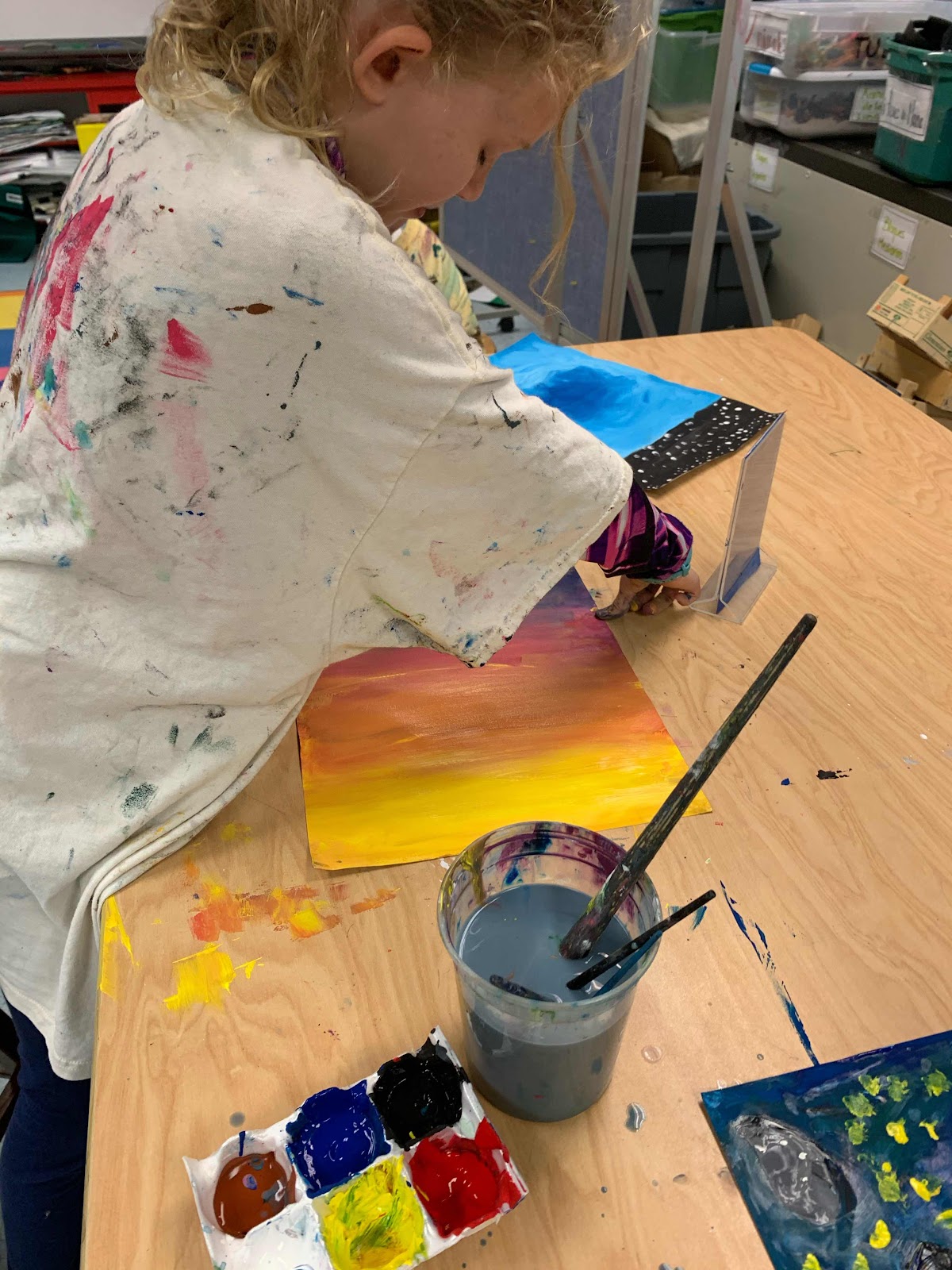


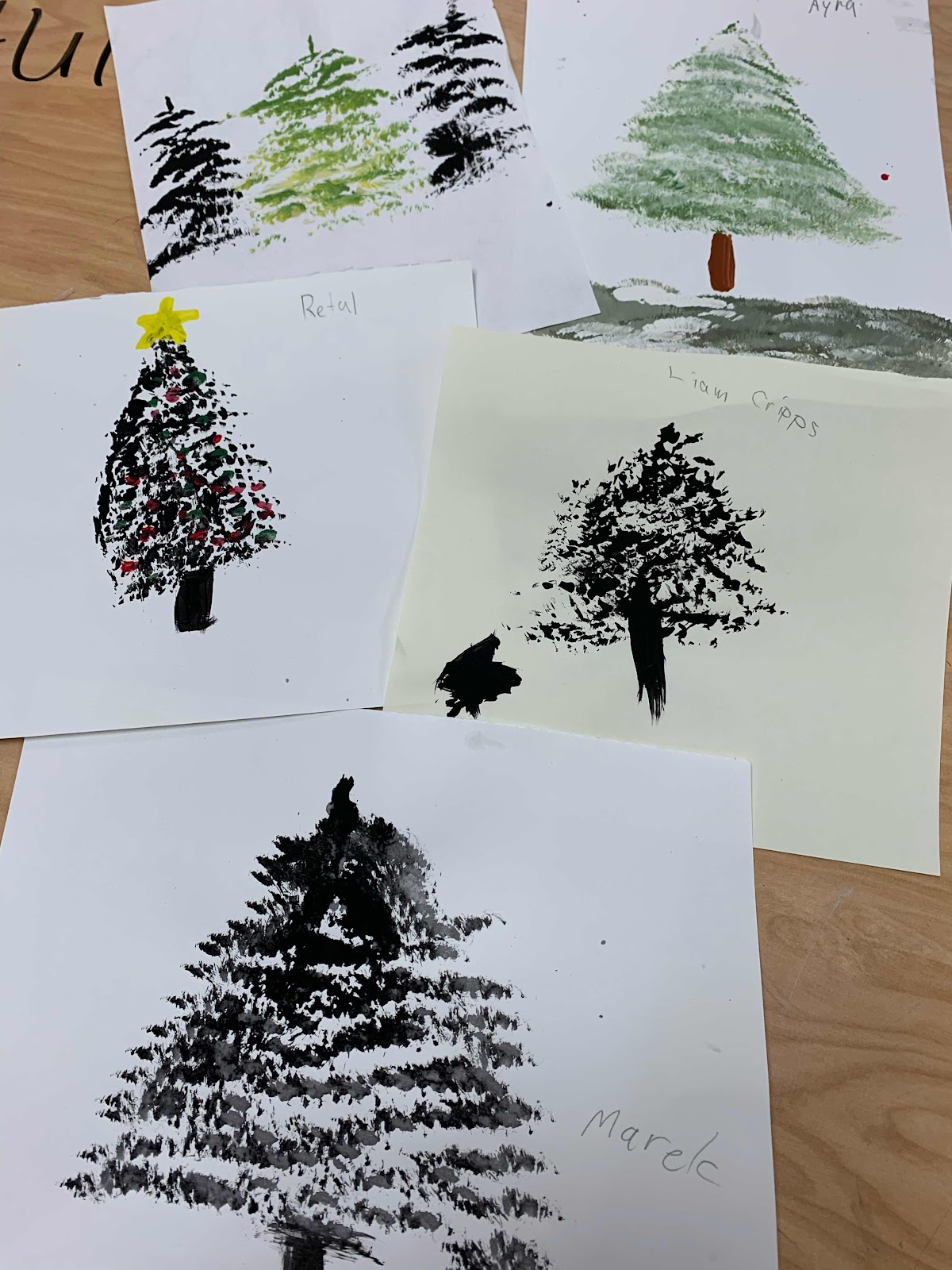
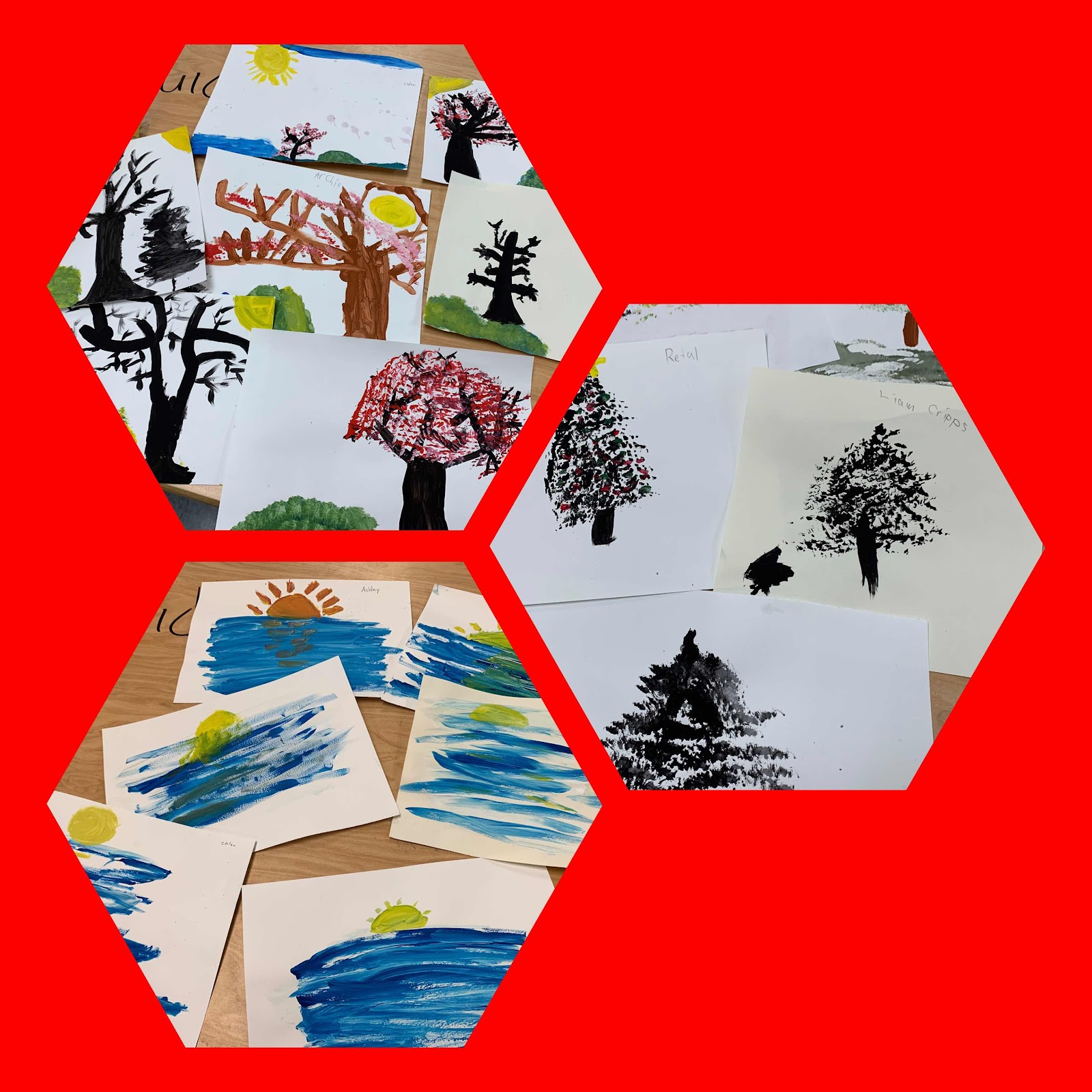
After exploration, students practice painting several aspects of a landscape painting. Trees, pines, flowers, sky, water, bushes...etc.

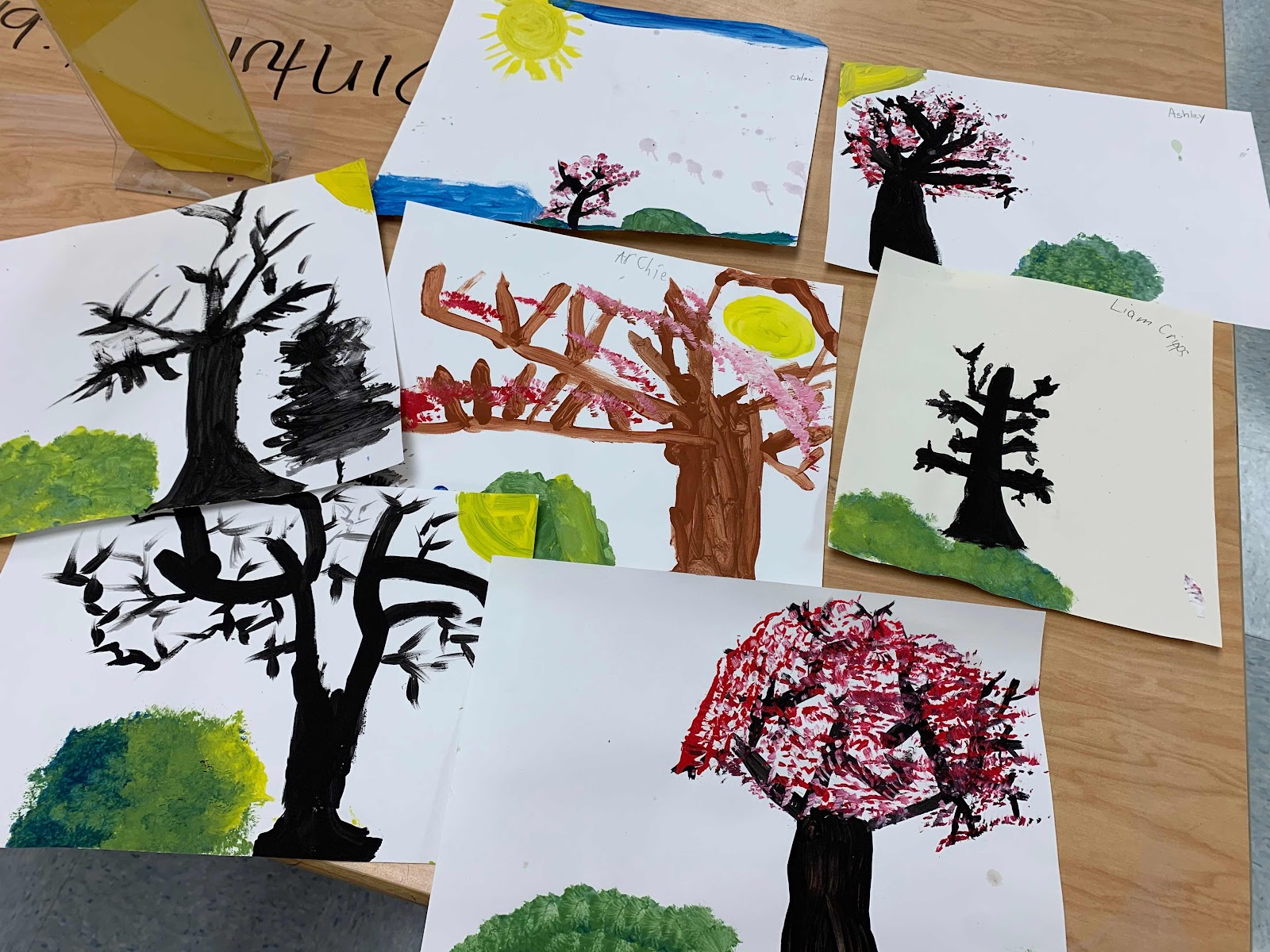
I also have tons of landscapes hung all over the classroom, for both inspiration and ideation.

I then have them choose, from a box of hundreds of calendar images of landscapes, one to inspire their own landscape....I do a short demo on how we paint back to front... so what we see furthest in the image is first. Time is also very important. Sometimes we wait for the color to dry to add paint on top, sometimes not.

Students have access to varied brushes... big brushes to fill in spaces fast, smaller for smaller spaces, fanned brushes for bushes and trees. detail brushes for fine lines.
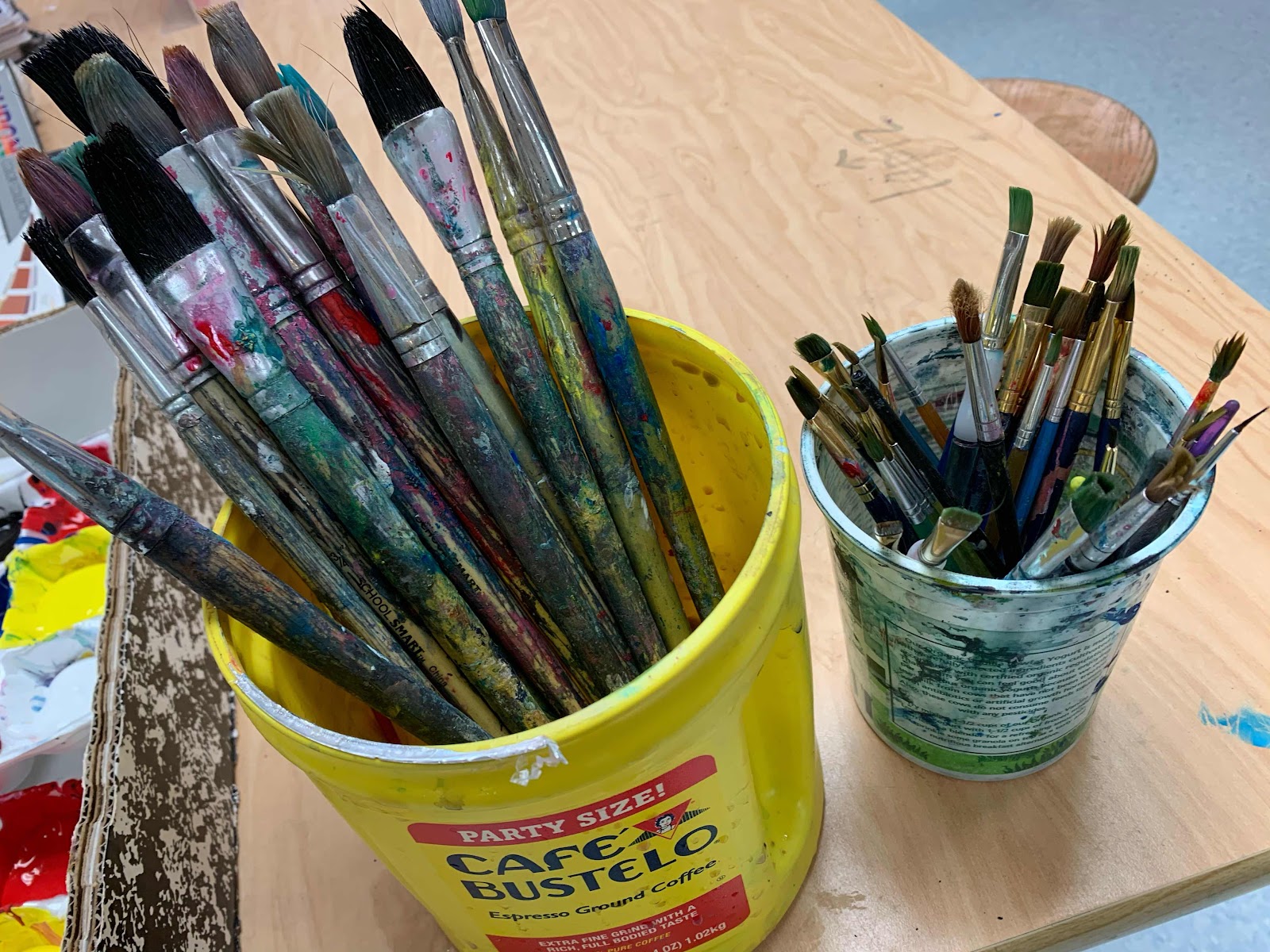

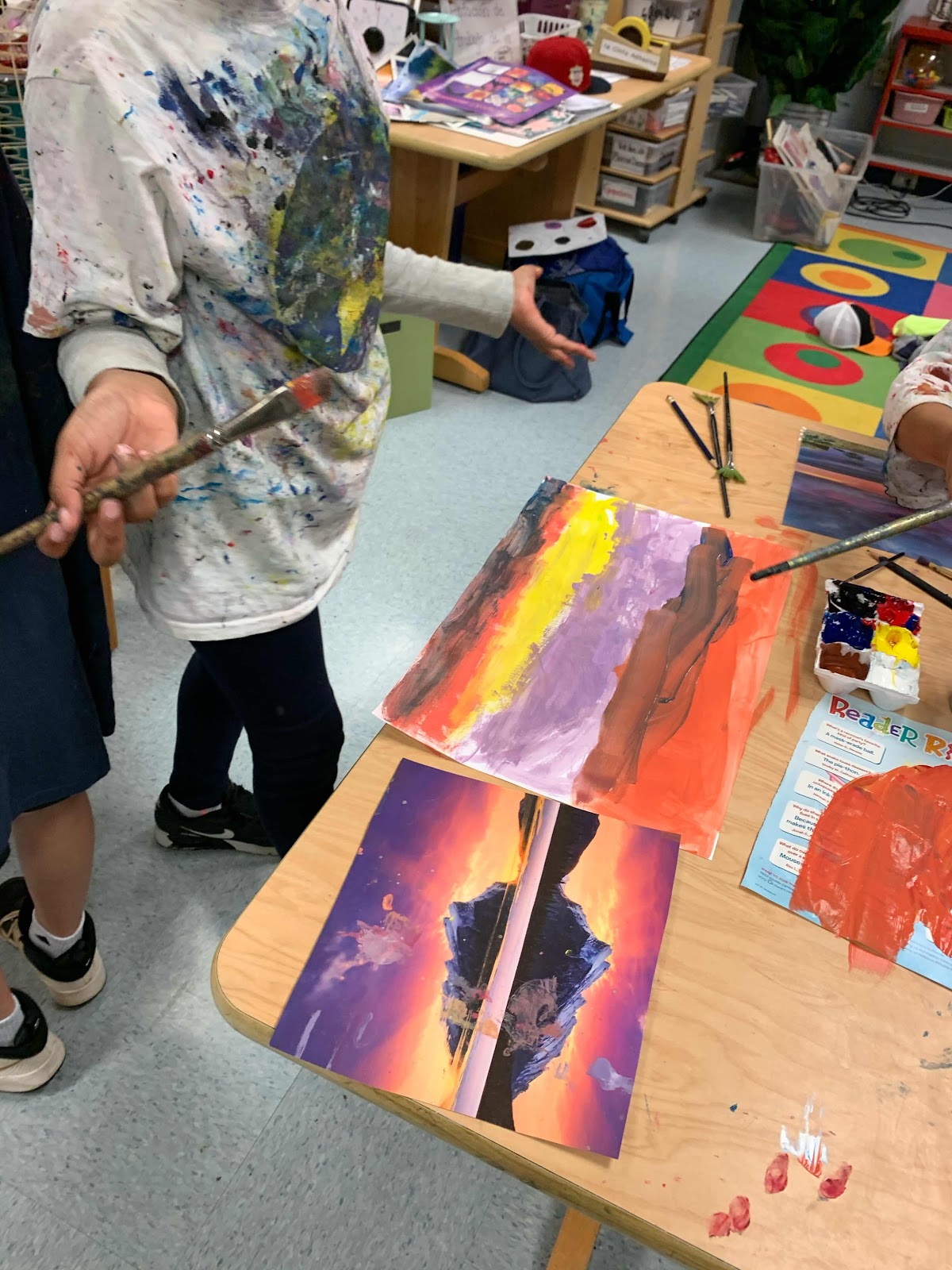
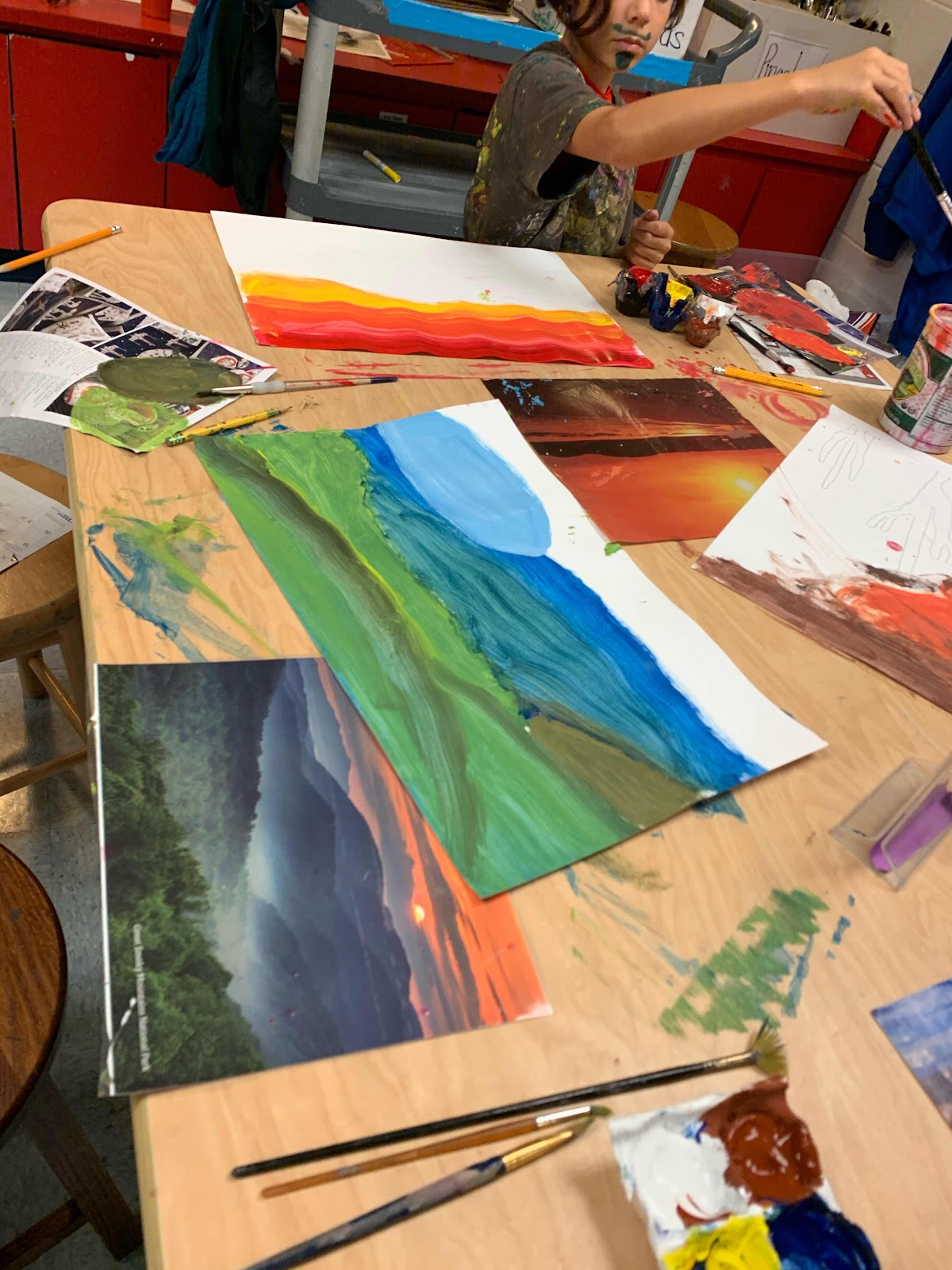
I have a table I call "the store" in the classroom. In Spanish we call it, "el mercado" (same translation). Kids can use any and all materials placed in this table. I have mixing paper (loose magazine pages), brushes, cups, and ready to go paint palettes. Kids have been taught to fill and clean up their own cups of water when needed, as long as it's only 3/4 of the way.


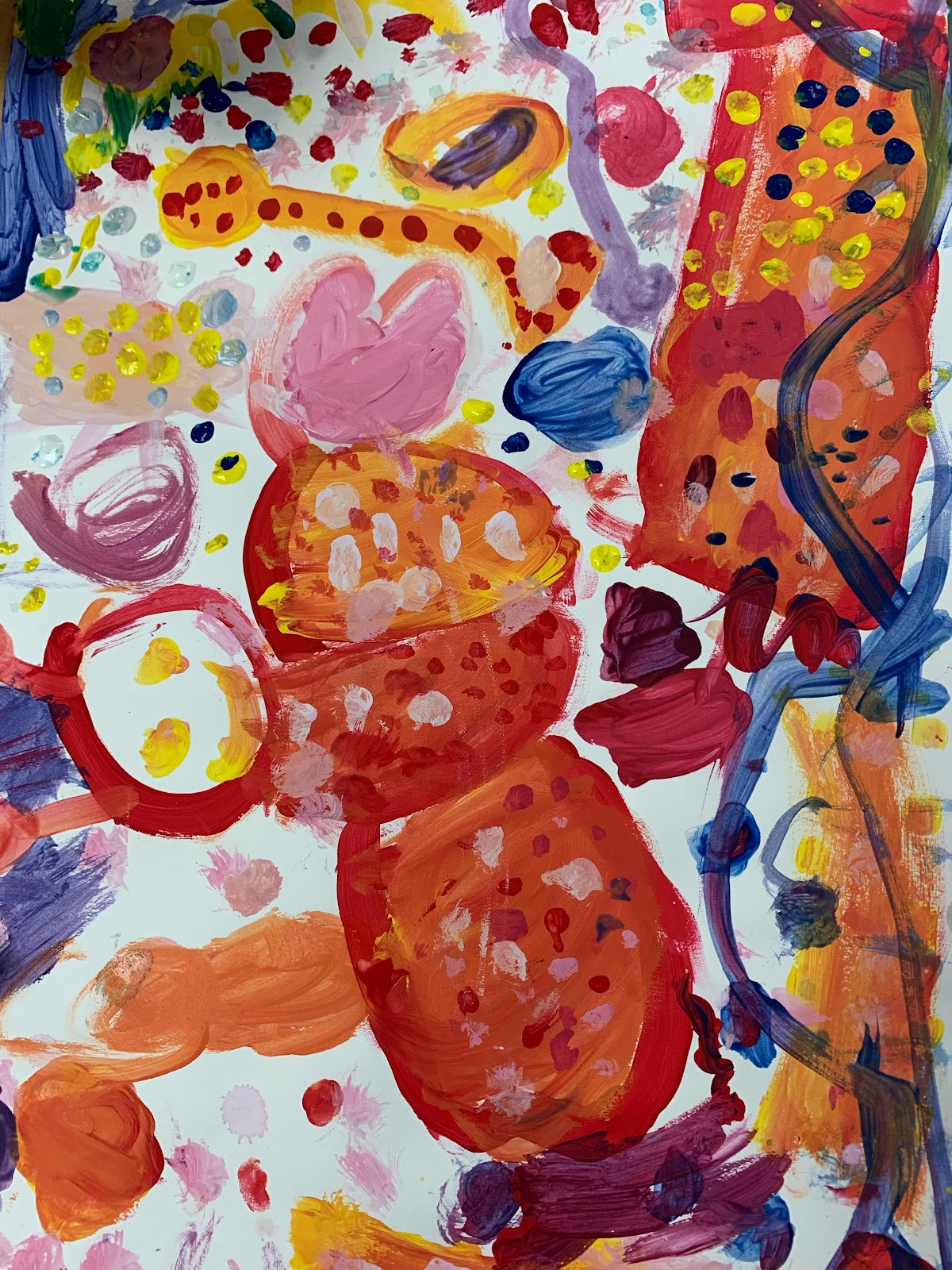
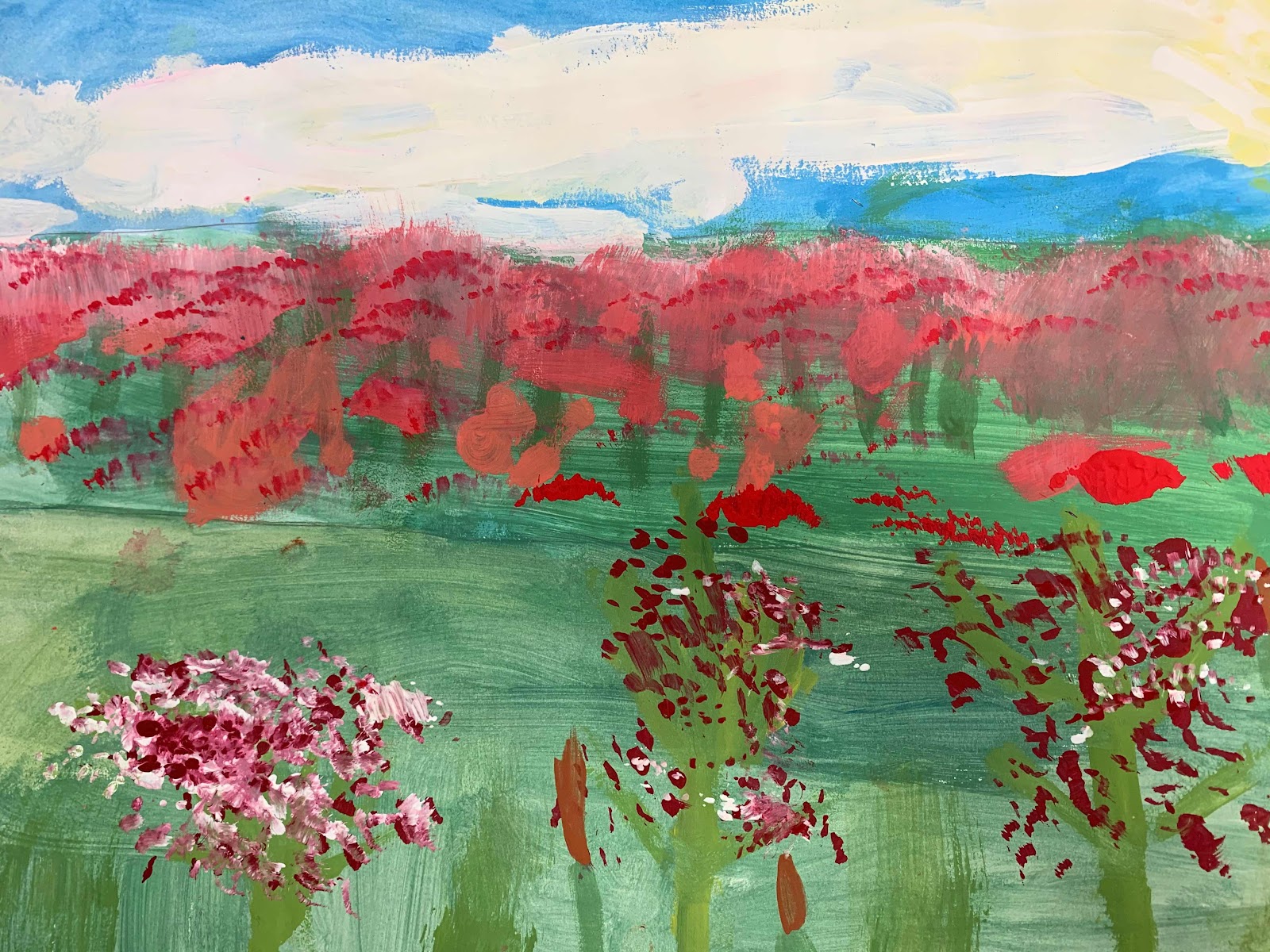
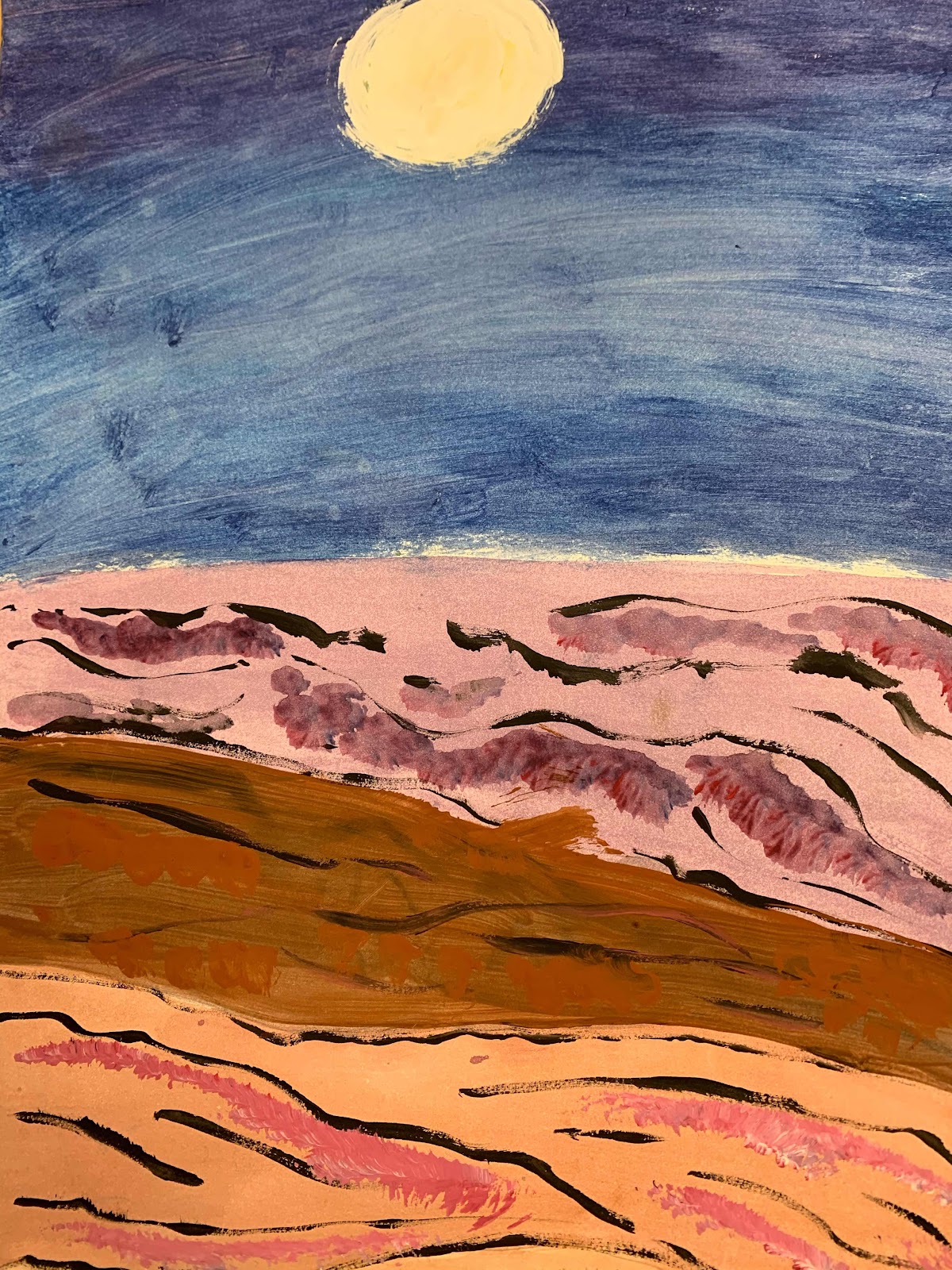
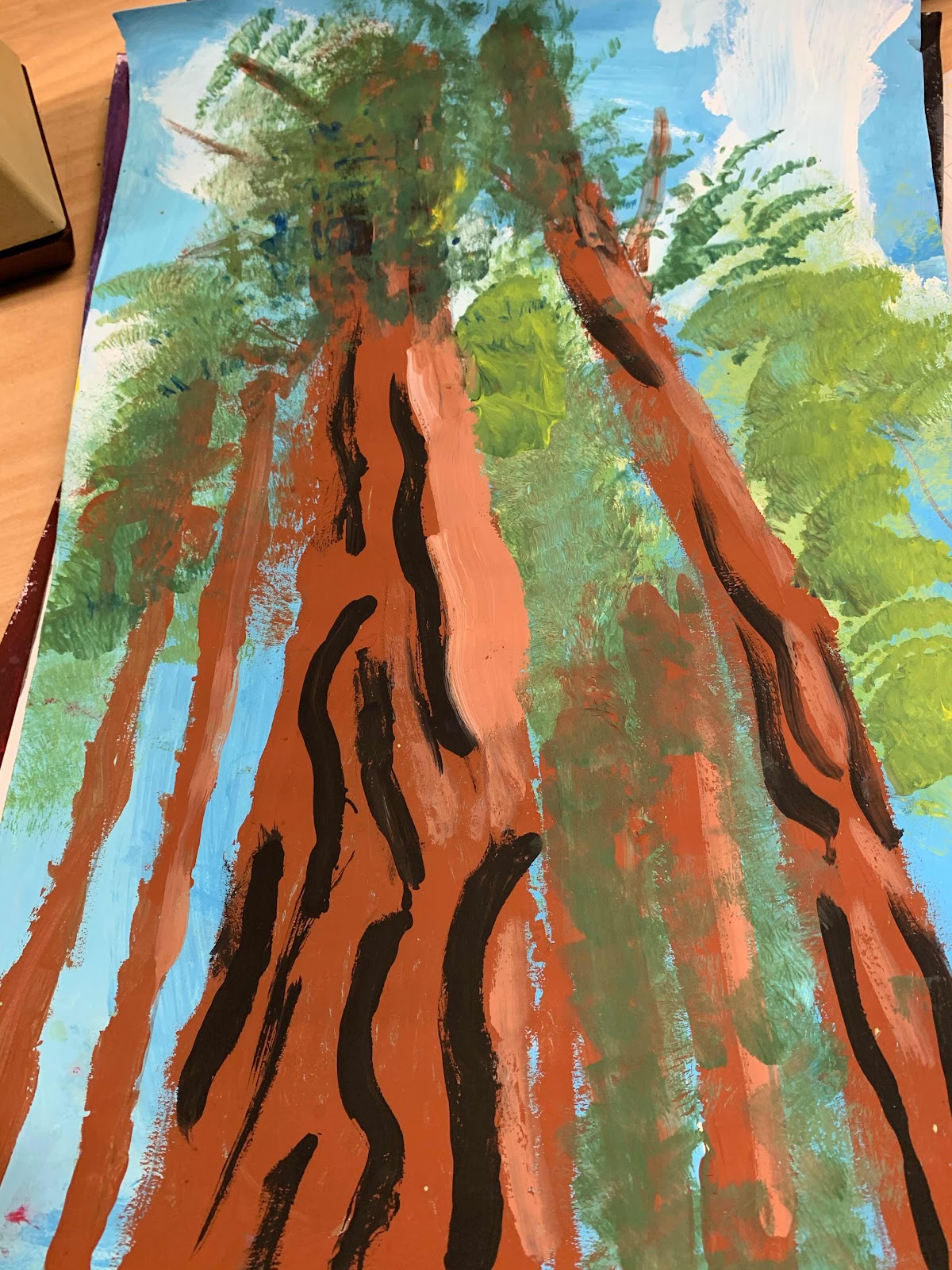
Some finished work ....hot off the press. Notice how different each piece is. Notice that they all are not the same idea. This is because I let them decide what to paint. The overall theme is landscape but within that they got to choose what to paint, and each faced the same set of challenges...such as how to make the colors needed, which colors go first, what brushes to use, should they wait or paint on the painting while wet with another color. All these are decisions they faced while working on their painting.







More images to come week of November 11, 2019.
Subscribe to:
Posts (Atom)